Family history · Hajdúdorog and Selmecbánya · 18th–20th centuries
The Ancestors of the Molnár Family
The direct ancestors of Molnár Annamária and Molnár Gábor, traced back from their parents through seven generations, on the basis of the records of the Greek Catholic parish of Hajdúdorog, the Roman Catholic parish of Selmecbánya and the civil registers, and of their father’s memoirs.
60 ancestors known by name
33 sources, 32 of them records with images
4 family lines
This family history presents the direct ancestors of Molnár Annamária (Zsuzsi) and her younger brother, Molnár Gábor (Gabi), going back from their parents, generation by generation. All four grandparental lines are linked to Hajdúdorog, a predominantly Greek Catholic Hajdú town 35 kilometres north of Debrecen. The exception is the earliest part of the Feldmájer line: the family’s ancestor, Julius Pfeilmajer, came from Selmecbánya (today Banská Štiavnica, Slovakia), the silver-mining town in Upper Hungary, in the late 1840s.
On the father’s side, the Molnár line (the ancestors of Molnár Lajos) and the Feldmájer line (the ancestors of Feldmájer Mária), and on the mother’s side, the Papp line (the ancestors of Papp György) and the Póka line (the ancestors of Póka Erzsébet) reach back into the past. The families who married into them – the Orosz, Korondán, Baksay, Káldy, Némeczki, Domokos, Fodor, Hajdu, Zováth, Veres and Kompár families – also appear in the various generations.
The text is based on data recorded in documents. Some details of the most recent generations, and of the link between Selmecbánya and Hajdúdorog, come from the family memoir, the memoirs of Molnár Lajos (1943–2024); the text marks these separately. Every statement is accompanied by a footnote; clicking on the footnote opens the image of the register entry cited. Where the records do not state a link unambiguously, the text says so: “probable” denotes strong but indirect evidence, while “possible” denotes an assumption resting only on a match of names or a partial match. The number next to a person’s name is the Ahnentafel (family tree) number* used in genealogical research internationally: number 1 is Molnár Annamária and Molnár Gábor, a person’s father has twice that person’s number, and the mother twice the number plus one.
The language of the registers examined changed from period to period: the Selmecbánya entries and the early Hajdúdorog entries were written in Latin, and those from the 1840s onwards in Hungarian. As a result, the same name appears in several forms: Pfailmayer, Pfeilmajer, Feldmayer and Feldmájer; Baksay and Baksai; Némeczki and Némeczky; Rosnyai and Rozsnyai.
Molnár Lajos himself researched his family’s past: in his memoirs he also describes his work in the branch archive at Hajdúböszörmény and in the Slovak church registers. He closed his chapter with these words: “Well, that is as much as I managed to find out about my ancestors with the help of the family lore, the registers and the World Wide Web.”1 This family history continues his work.
The baptism of Julius in Selmecbánya, 11 December 1820. Page 173 of the Latin baptismal register of the Roman Catholic parish of Selmecbánya: according to the fourth entry, Julius’s parents were Joannes Pfailmayer, a hewer (“Hajerus”), and Elisabetha Eitzenbaum. Julius was the only member of the large family to move to Hajdúdorog, in the late 1840s; there his descendants’ name was written Feldmájer, and later Feldmayer. Document 2
Family tree
The full ancestor chart
Reading from left to right, each column is one generation earlier. Click a person to jump to the part of the story about them. The number is the Ahnentafel (pedigree) number: a father’s number is twice his child’s, a mother’s is twice plus one. A dashed frame and line mark a probable link, a dotted one a possible link.
Molnár line – ancestors of Molnár Lajos (#4)
Feldmájer line – ancestors of Feldmájer Mária (#5)
Papp line – ancestors of Papp György (#6)
Póka line – ancestors of Póka Erzsébet (#7)
certain link
probable
possible
Starting point #1
Molnár Annamária and Molnár Gábor
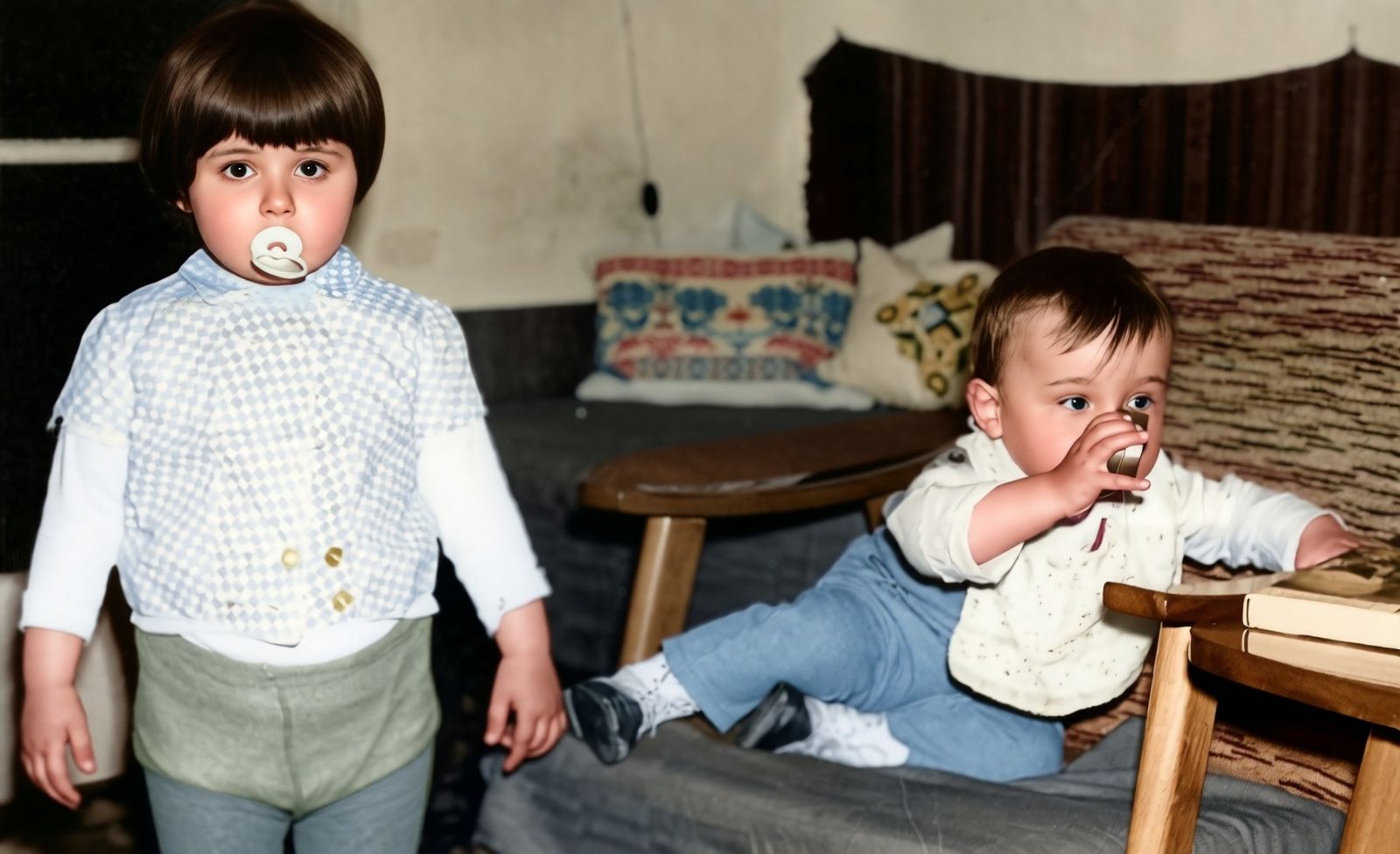
Molnár Annamária – known in the family as Zsuzsi – was born on 26 March 1971, and her younger brother, Molnár Gábor – Gabi – on 21 October 1972, both in Budapest, at the Kispest Hospital1; Kispest has been part of Budapest since 1950a. Their parents were then living in Kisújszállás: their father was chief engineer and deputy head of the Kisújszállás track maintenance office of the Hungarian State Railways (MÁV), while their mother spent her internship year at the hospital in Karcag in 1970 and, from the spring of 1973, ran a paediatric outpatient clinic in Kisújszállás1. In the spring of 1975 the family moved to Debrecen, to Petőfi tér 6., and in October 1988 to their new family house in Patay István utca1. The birth register entries of the two are not part of the processed collection; their details are based on the family memoir.
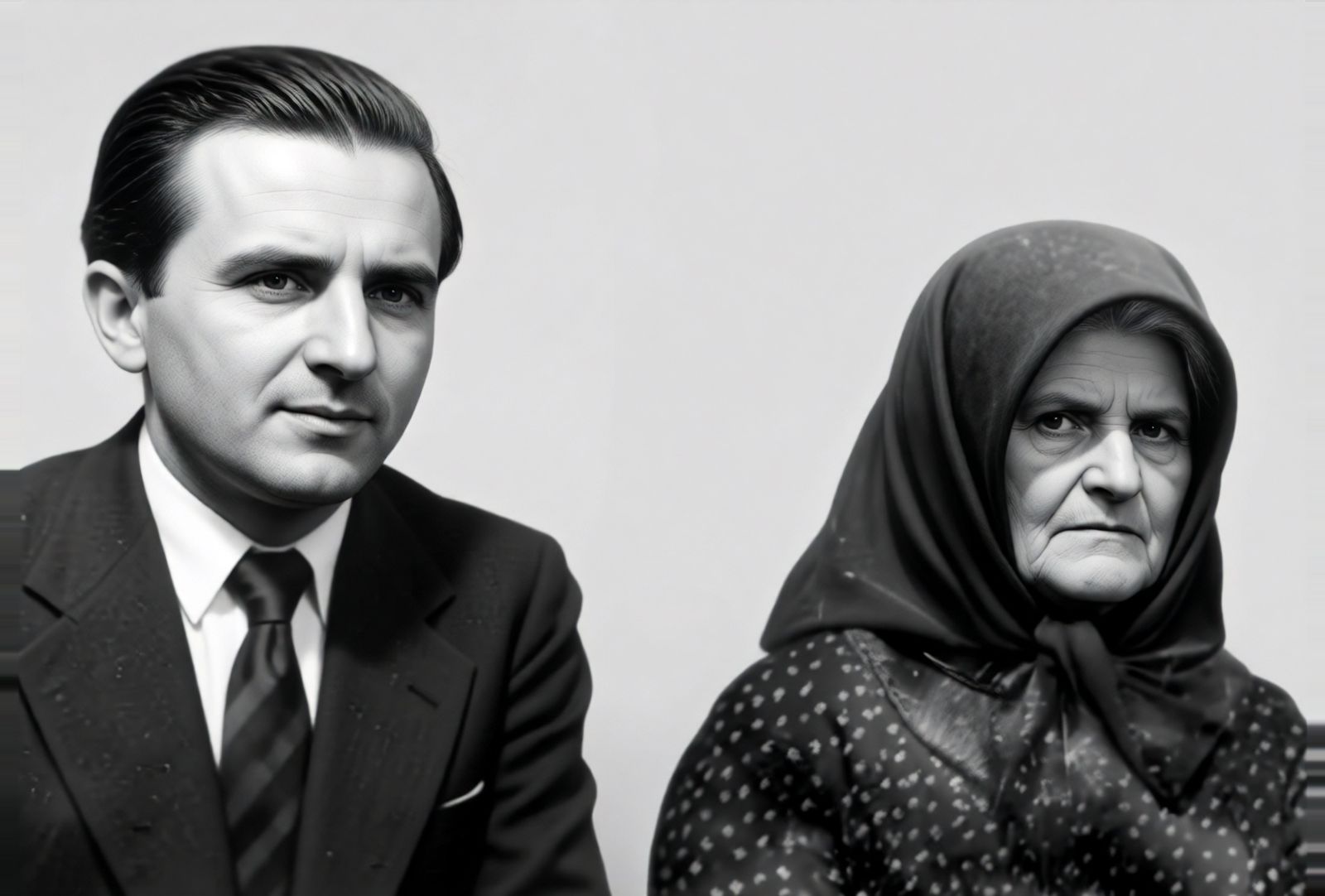
Zsuzsi and Gabi in the first half of the 1970s.Family collection · digitally restored photograph
until 1975 Kisújszállás; 1975–1988 Debrecen, Petőfi tér 6. II/12.; from 1988 Debrecen, Patay István utca 30.1
Education
Debrecen, the Ságvári Endre utca Primary School (Zsuzsi from 1977, Gábor from 1979); the Practice Grammar School of KLTE (Kossuth Lajos University) (Zsuzsi from 1985, Gábor from 1987)1
Marriage
Molnár Gábor married dr. Laczó Adrienn on 16 September 2000; Molnár Annamária married Seregi László at Pilismarót in the summer of 20021
Note
Their birth register entries are not part of the processed collection; their details are based on the family memoir.
Two birthdays
Two days in history
What was happening in Hungary and in the world on the days when Molnár Annamária and her younger brother, Molnár Gábor, were born. The news from Hungary also includes events from a few days before or after each birthday; the exact date is given for every item.
Birthday of Molnár Annamária (Zsuzsi)
Friday, 26 March 1971
That day, news bulletins around the world reported the proclamation of independence of East Pakistan – later Bangladesh; in Hungary, preparations were under way for the parliamentary elections to be held a month later.
In Hungary, in the days around the birthday
That day, Híradó, the news programme of Magyar Televízió (Hungarian Television), also reported that East Pakistan had declared itself an independent state under the name Bangladesha.
Two days earlier, on 24 March, the actress Kiss Manyi, winner of the Jászai Mari Prize and the Madách Theatre’s highly acclaimed Mother Courage, died in Budapest at the age of 60b.
Six days earlier, on 20 March, the management meeting of Hungarian Television adopted the paper “A második program és a színes adás terve” (“The plan for the second channel and colour broadcasting”) as a basis for discussion, and decided that the gala of the 1971 Táncdalfesztivál (pop song festival) would also be broadcast on the experimental colour servicea.
Two days later, on 28 March, the World Table Tennis Championships began in Nagoya, Japan, where Jónyer István and Klampár Tibor won the world title in the men’s doublesc.
A month later, on 25 April, parliamentary elections were held; more than one candidate stood in 49 of the 352 constituenciesd.
The First Secretary of the Hungarian Socialist Workers’ Party (MSZMP) was Kádár János, the Chairman of the Council of Ministers was Fock Jenő, and the President of the Presidential Council was Losonczi Pále,f,g.
In the world
After midnight on 26 March, Sheikh Mujibur Rahman, leader of the Awami League, proclaimed the independence of East Pakistan under the name Bangladesh; the Pakistani army arrested him the same day, and President Yahya Khan banned the Awami League. Since then, 26 March has been Bangladesh’s national holiday, Independence Dayh,i,j.
In Turkey, Nihat Erim became Prime Minister: following the army’s memorandum of 12 March and the resignation of Süleyman Demirel, he formed a non-partisan government made up mainly of expertsk.
In Argentina, General Alejandro Agustín Lanusse, Commander-in-Chief of the Army, took office as President after overthrowing Roberto Levingston on 23 Marchl,m.
In Japan, Unit 1 of the Fukushima I (Daiichi) nuclear power plant entered commercial operation; the plant went on to operate for almost forty yearsn,m.
Emerson, Lake & Palmer recorded live at Newcastle City Hall their rock arrangement of Mussorgsky’s piano cycle Pictures at an Exhibition; the album reached number 3 in the UK albums charto.
In London, the Rolling Stones played the Marquee Club in front of an audience of about 150 for a television recording; the album Sticky Fingers came out a few weeks laterp.
Janis Joplin’s “Me and Bobby McGee” was at the top of the American Billboard chart – a posthumous success, as the singer had died the previous October – while the UK singles chart was led by T. Rex’s “Hot Love”q,r.
Birthday of Molnár Gábor
Saturday, 21 October 1972
That day, Western European newspapers were assessing the Paris summit of nine European countries, and in America the sixth game of the baseball World Series was being played; at home in Hungary, the successes at the Munich Olympics and the Skopje Chess Olympiad were still fresh.
In Hungary, in the days around the birthday
Eight days earlier, on 13 October, the 20th Chess Olympiad ended in Skopje, Yugoslavia: the Hungarian team – Portisch Lajos, Bilek István, Forintos Győző, Ribli Zoltán, Csom István and Sax Gyula – won the silver medal behind the Soviet Unions.
At the Munich Summer Olympics, the Hungarian team won 6 gold, 13 silver and 16 bronze medals and finished 8th in the ranking of nationst.
According to Radio Free Europe’s situation report on Hungary of 24 October, a shortage of diesel fuel had delayed the autumn work in agricultureu.
Five days later, on 26 October, Gábor Pál’s film Utazás Jakabbal (Voyage with Jacob) was premieredv.
Two months later, on 22 December, the Deák Ferenc tér–Déli pályaudvar section of Metro Line 2 was openedw.
The First Secretary of the Hungarian Socialist Workers’ Party was Kádár János, the Chairman of the Council of Ministers was Fock Jenő, and the President of the Presidential Council was Losonczi Pále,f,g.
In the world
The news reported on the Paris summit of the member and acceding states of the Common Market on 19–20 October: the nine countries declared that they would transform their relations into a European Union by the end of the decade; the press in Bonn and London gave the outcome a restrained receptionx,y.
In Somalia, on the third anniversary of the revolution, a national Latin-script orthography for the Somali language was introduced, and Somali was made the country’s sole official languagez,aa.
US President Richard Nixon signed the Marine Mammal Protection Act, which prohibits the hunting and harassment of marine mammals, as well as the Federal Environmental Pesticide Control Actab,ac.
The search for the Uruguayan Air Force plane that had crashed in the Andes on 13 October was called off after 142 and a half hours; on board had been members of the Old Christians rugby team and their relatives. The 16 survivors were rescued on 22–23 Decemberad,ae.
In Belgrade, two leaders of the League of Communists of Serbia who had been accused of “liberalism” resigned: its President, Marko Nikezić, and its Secretary, Latinka Perovićaf,ag.
In Cincinnati, in front of 52,737 spectators, the Cincinnati Reds beat the Oakland Athletics 8–1 in the sixth game of the baseball World Series; Oakland won the deciding seventh game the next dayah,ai.
Chuck Berry’s “My Ding-a-Ling” went to the top of the Billboard chart of 21 October – Berry’s first and only number-one single in America; the top of the UK chart was held by Lieutenant Pigeon’s “Mouldy Old Dough”aj,ak,r.
Reconstruction and the railway: Hajdúdorog, Debrecen, Kisújszállás
In Hajdúdorog the local National Committee (Nemzeti Bizottság) was formed on 27 November 1944 under the leadership of Hadházi György, and on 15 February 1945 the new municipal council (képviselő-testület) was elected under Soviet supervisiona. The land reform was proclaimed on 15 March 1945; in its local implementation it was mainly the large estates in the northern part of the town’s lands that were divided upa. In 1948 the first agricultural cooperative (termelőszövetkezet) was founded, and in the same year the Greek Catholic elementary school was nationalised; collectivisation in Hajdúdorog was completed in January 1961 with the establishment of five agricultural cooperativesa. The population of the settlement grew to nearly 12,000 by 1940 and has been declining since then, with minor fluctuationsb.
The organisation of small craftsmen into cooperatives began in Hajdúdorog on 1 September 1949 with the founding of the Hairdressers’ KTSZ (small-industry cooperative)a. Nationally, between 1949 and 1953 the number of small-industry cooperatives rose from 378 to 1,606 and their membership from 11,060 to 109,775, while the number of people working in private small industry fell from 286,420 to 52,274c. Private craftsmen were squeezed out by high taxes, the allocation of materials by voucher and the suspension of credit, whereas cooperative membership meant paid holidays and a pensionc. It is within this process that Molnár Lajos, a shoe-upper maker, joined the shoemakers’ KTSZ in 1953, and that Papp György, a carpenter, retired from the Mixed Trades KTSZ (Vegyes KTSZ) of Hajdúdorog1. In 1962 a plant of the Debrecen Clothing Factory (Debreceni Ruhagyár) opened in the building of the former tobacco factory, and on 1 January 1970 Hajdúdorog was granted the status of a large village (nagyközség)a.
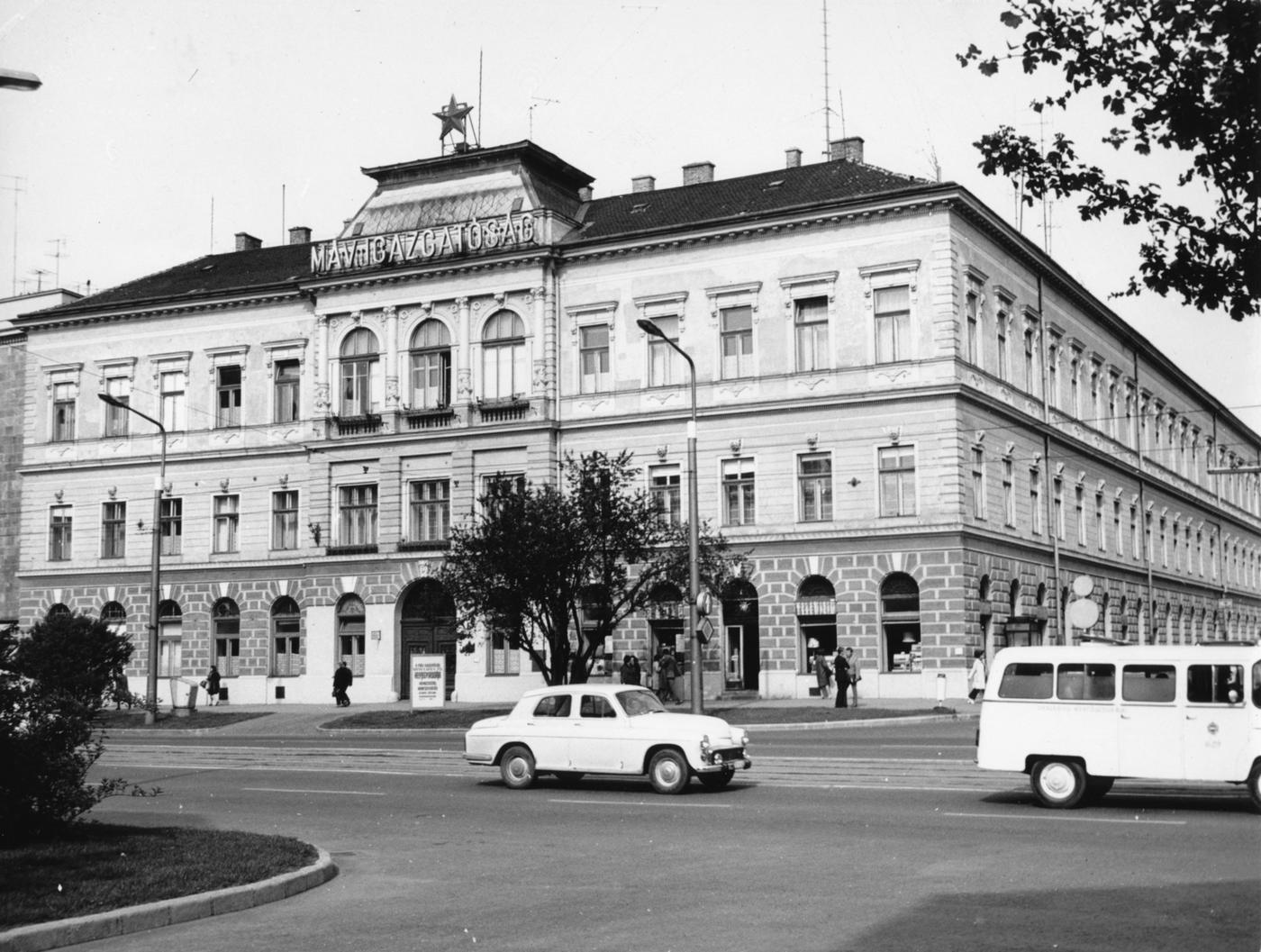
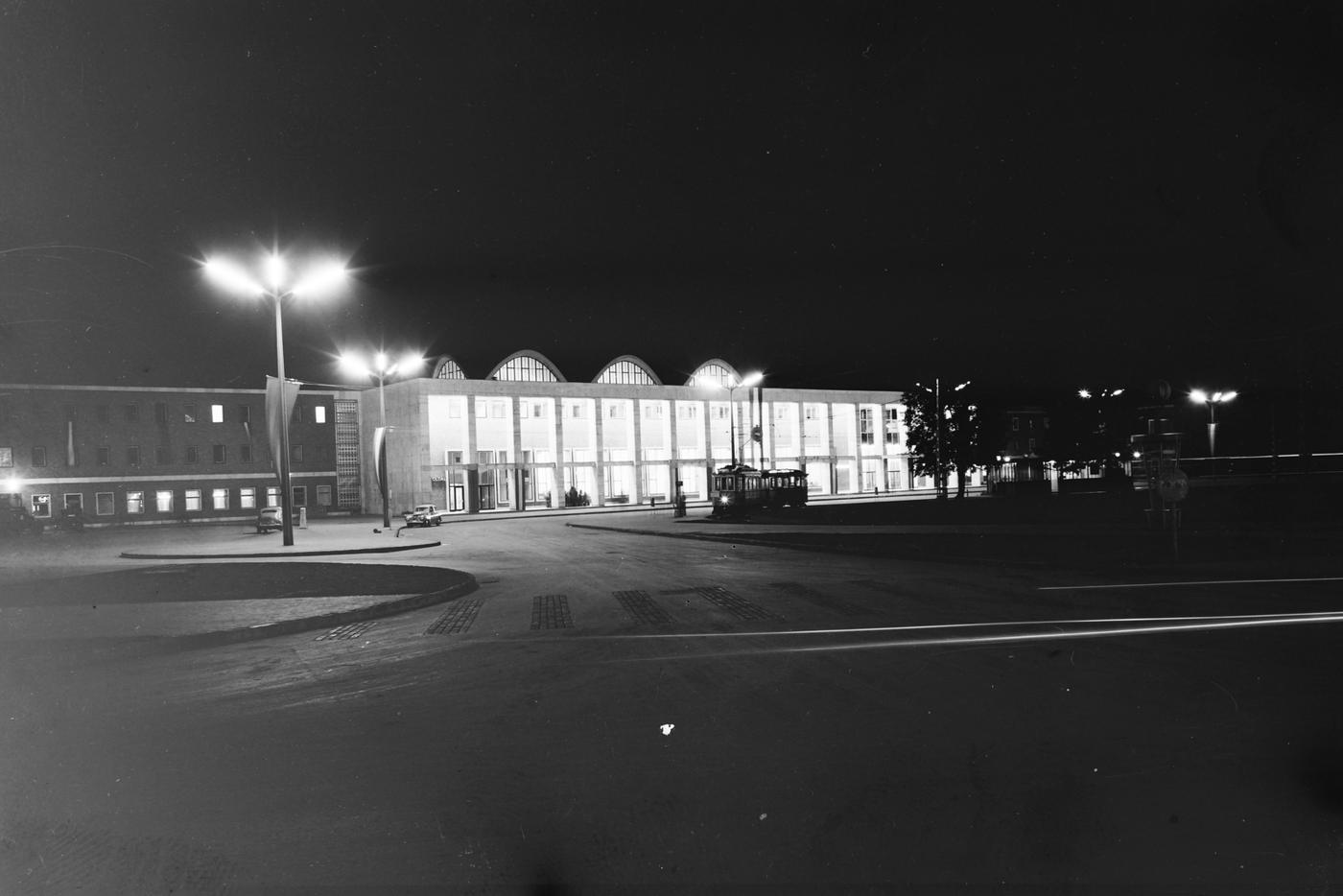
The Debrecen district management (üzletvezetőség) of the Hungarian State Railways (MÁV) began operating on 5 August 1890, with a network of nearly 2,200 kilometres at the outset; the directorate was later housed in the Tisza Palace (Tisza-palota)d. Repair of the war damage began in October 1944: by March 1945 every line apart from the large bridges was passable on a single track, and in 1964 the second track as far as Debrecen was completedd. In Kisújszállás a permanent-way maintenance office (pályafenntartási főnökség) was set up in the autumn of 1952 – from 1969 Molnár Lajos was its chief engineer – and in 1970 the overhead line between Szajol and Nyíregyháza was built, with substations at Szajol, Karcag and Ebes1d. The hospital in Karcag, where Papp Anna spent her year of practical training in 1970, today bears the name of Kátai Gábor (1831–1878), a physician and pharmacist born in Karcag1e.
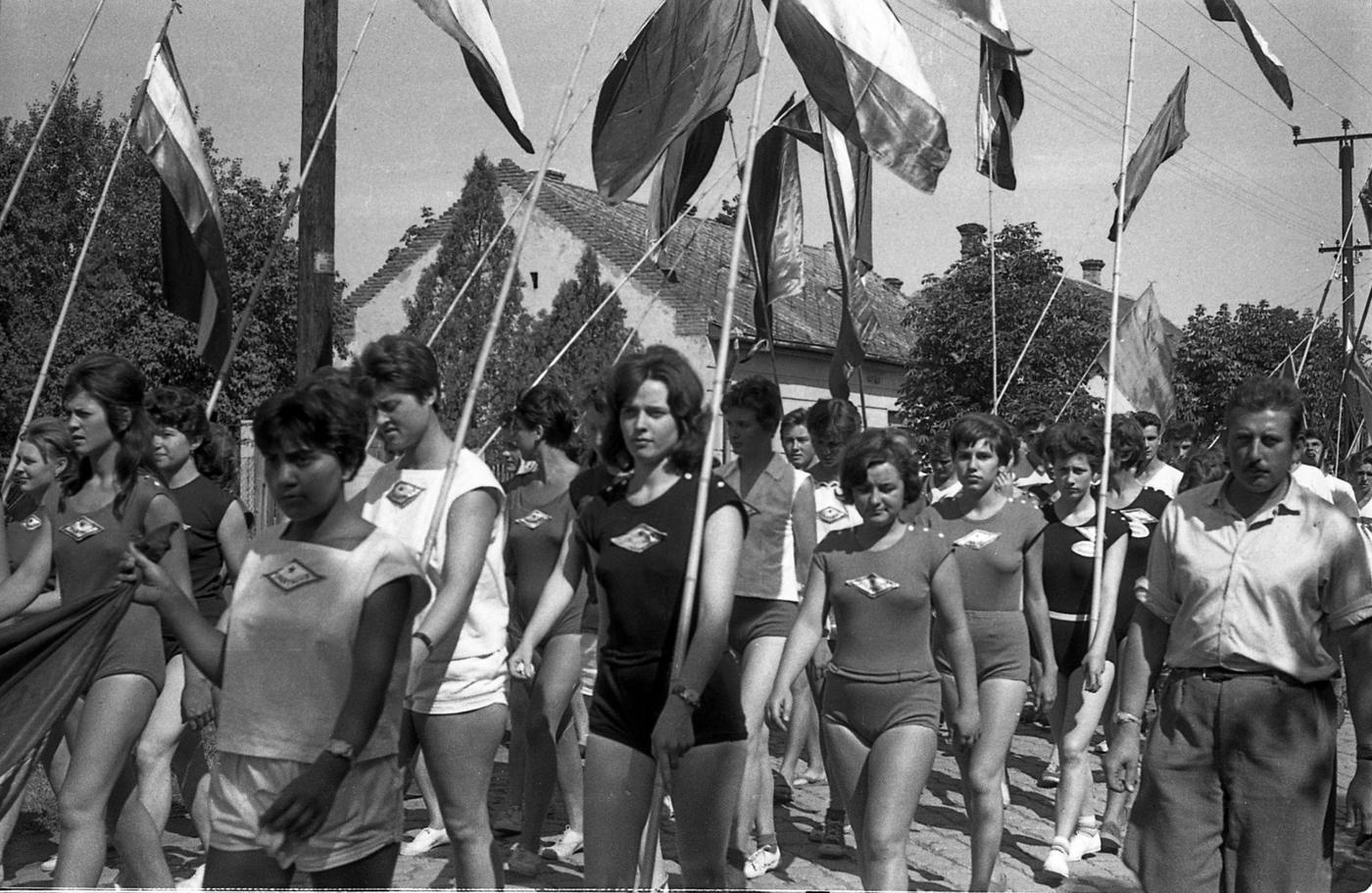
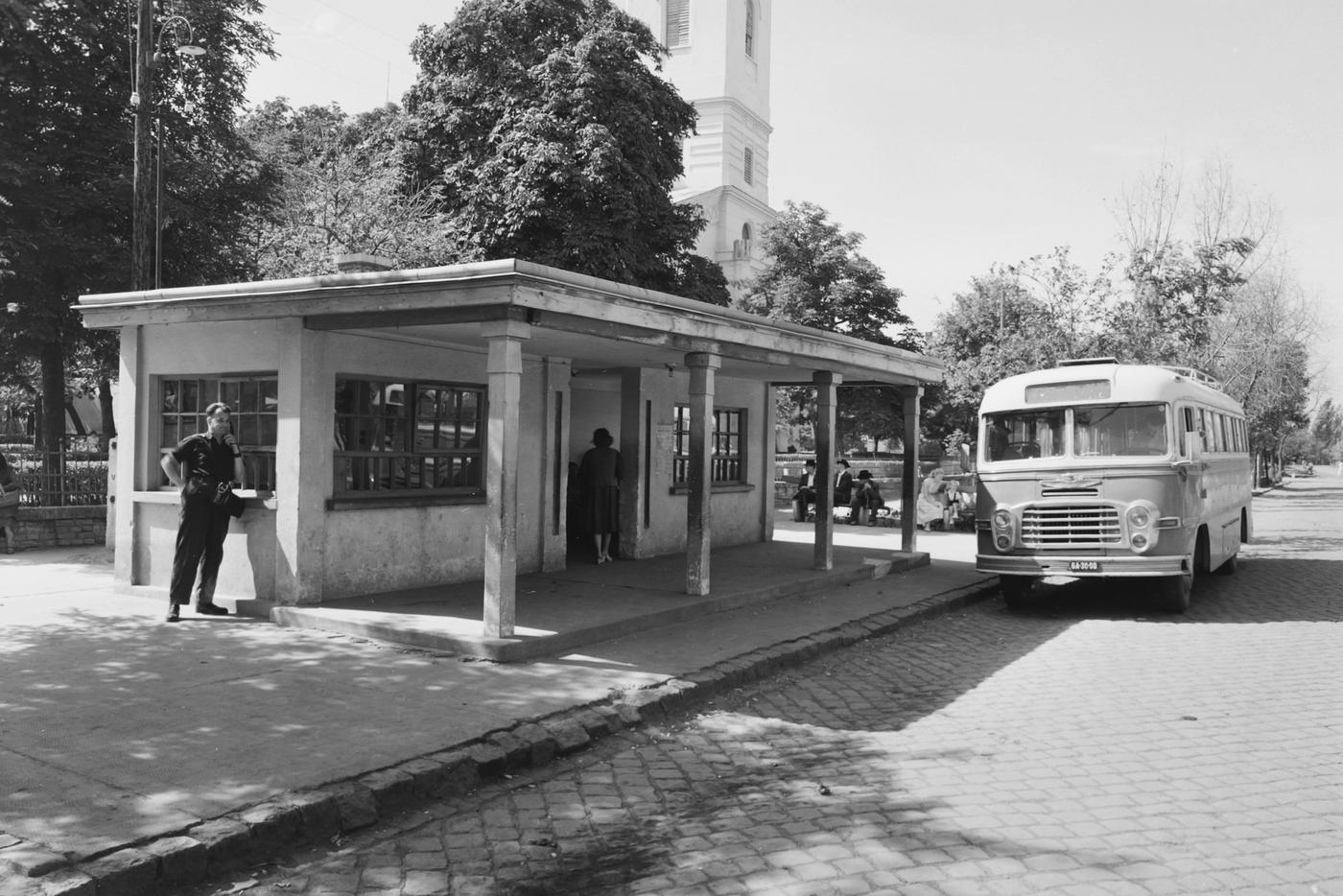
The MÁV Directorate building in Debrecen, on the corner of Piac utca and Rózsa utca, 1970.1970 · FORTEPAN / Bencze László · CC BY-SA 3.0 · Fortepan 151996Debrecen’s main railway station (Nagyállomás) on Petőfi tér, in the evening, 1961.1961 · FORTEPAN / UVATERV · CC BY-SA 3.0 · Fortepan 27016A parade on Rákóczi utca in Kisújszállás, 1961.1961 · FORTEPAN / Morvay Kinga · CC BY-SA 3.0 · Fortepan 140498The bus station on Kossuth tér in Karcag, 1961.1961 · FORTEPAN / UVATERV · CC BY-SA 3.0 · Fortepan 2666
Clicking a photograph opens it on the Fortepan website. Terms of use: credit Fortepan and the donor (CC BY-SA 3.0).
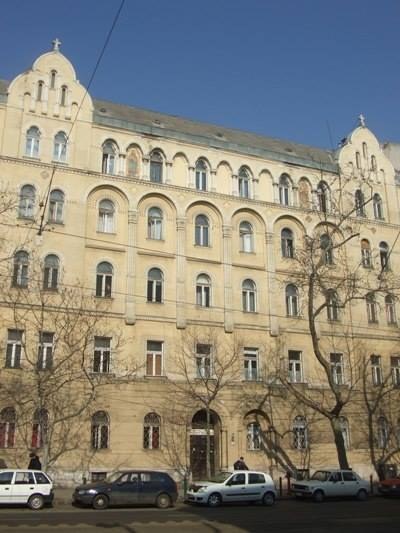
Bartók Béla út 17., the building of the former Vásárhelyi Pál Hall of Residence, in a later photograph. Molnár Lajos lived here as a university student between 1962 and 1967.Later photograph
Molnár Lajos was born on Saturday, 20 February 1943, at home in Hajdúdorog, in the house at Sarok utca 12., a street opening off the main square; at that time the houses at Sarok utca 10–12. were home to craftsmen’s families, among them six shoemakers1. According to family memory he was “stillborn”: the doctor who delivered him, Dr Bezzegh János, revived him by dipping him alternately into hot and cold water1. His younger brother, György, was born on 14 January 19451. He started school in 1949 at the boys’ school in Hajdúdorog, and in 1957 he was admitted to the Railway Construction Technical School (Vasútépítési Technikum) in Budapest; its hall of residence was at József körút 16., in the building of the former Savoy Grand Hotel, which has again been a hotel since 20151. In 1961 he passed his school-leaving examination (érettségi) with distinction and began work as a trainee technician at MÁV’s Debrecen North track maintenance office1.
“The working conditions in my first year as a trainee technician floored me so completely that I decided: the only way out was to continue my studies!” he wrote in his memoirs1. Between 1962 and 1967 he studied at the Faculty of Civil Engineering of the Budapest Technical University on a MÁV scholarship, and lived in the university hall of residence at Bartók Béla út 17., the Vásárhelyi Pál Hall of Residence1a. As a student he designed the new headquarters building of the Hajdúdorog KTSZ (small-industry cooperative), which was built in 1967 at Böszörményi út 14., on the very site of his own former nursery school1.
After graduating he returned to MÁV’s Debrecen track maintenance office, and from 1 January 1969 he was chief engineer and deputy head of the Kisújszállás Track Maintenance Office1; the Kisújszállás track maintenance office had been set up in the autumn of 1952b. In 1972 he obtained a degree in transport economics engineering, in 1974 he moved to the construction department of the Debrecen MÁV Directorate, and in 1980 he was awarded a doctorate in technical sciences in the discipline of “Vasútépítéstan” (railway construction)1. From 1990 he was technical director of the Debrecen directorate, from 1993 head of the track department of the Eastern Hungary Directorate, and from 1996 until his retirement regional head in Debrecen of MÁV’s railway infrastructure division (Pályavasút)1. In 1998 he received the Jáky József Prize of the Scientific Association for Transport (Közlekedéstudományi Egyesület), and in 2000 he was appointed titular railway director; he retired on 20 February 2003, after 42 years of service with MÁV1.
Papp Anna – known in the family as Marcsika – is the younger daughter of Papp György, a carpenter, and Póka Erzsébet1; her elder sister, Erzsike, was born in 1937. She spent her childhood and youth in Budapest: from 1940 she lived at Akácfa utca 11., between 1942 and 1946 at Szent István park 10. in Újlipótváros, then in Korponay utca, and at Rottenbiller utca 17. between 1949 and 19571. For 1949–1953 the table of residences also lists Fehértói út 36. in Hajdúdorog, where her parents had moved back1. She completed a residential nurse-training course and then studied medicine; she was conferred the degree of doctor of medicine at the Erkel Theatre in September 19701.
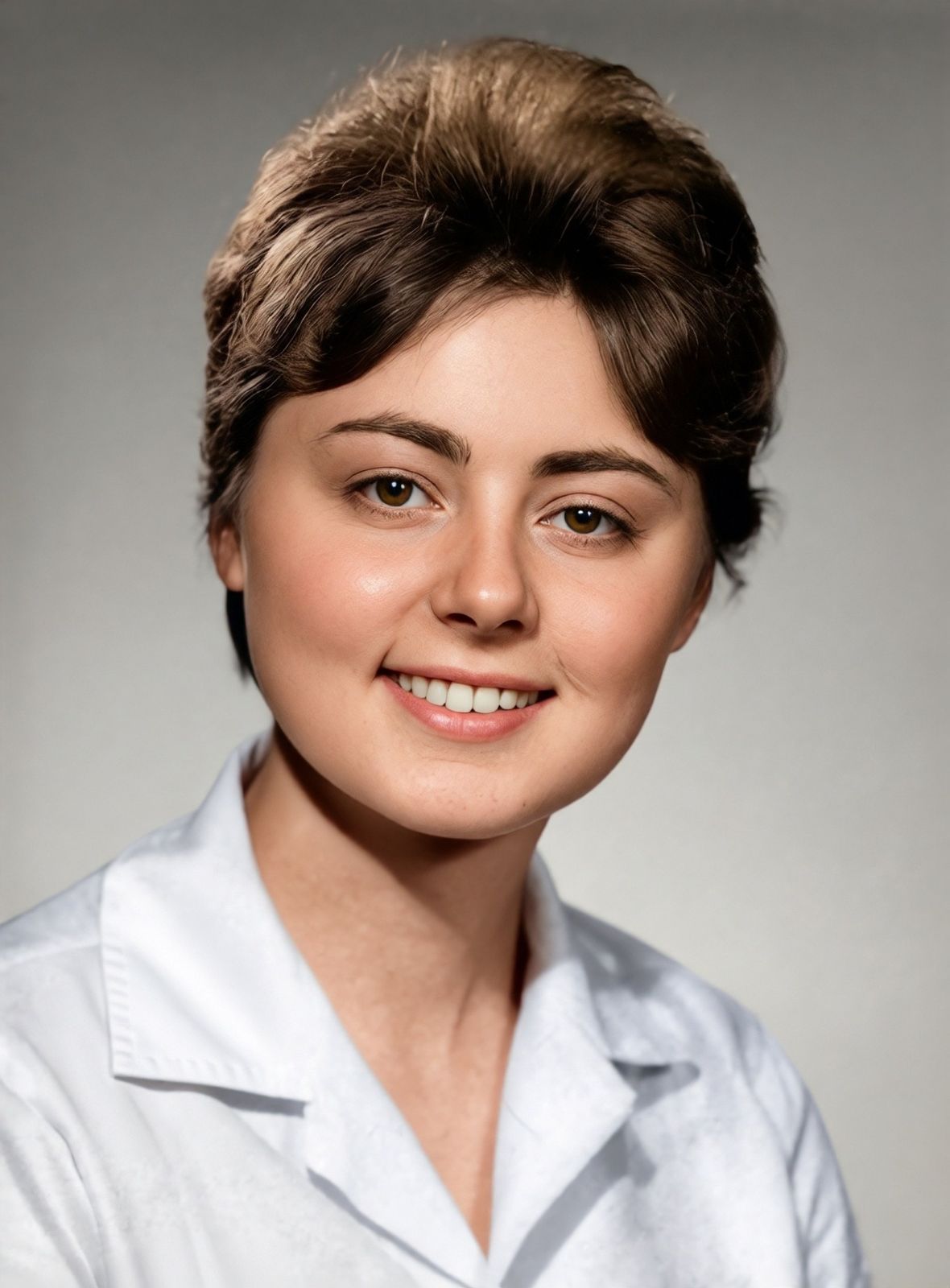
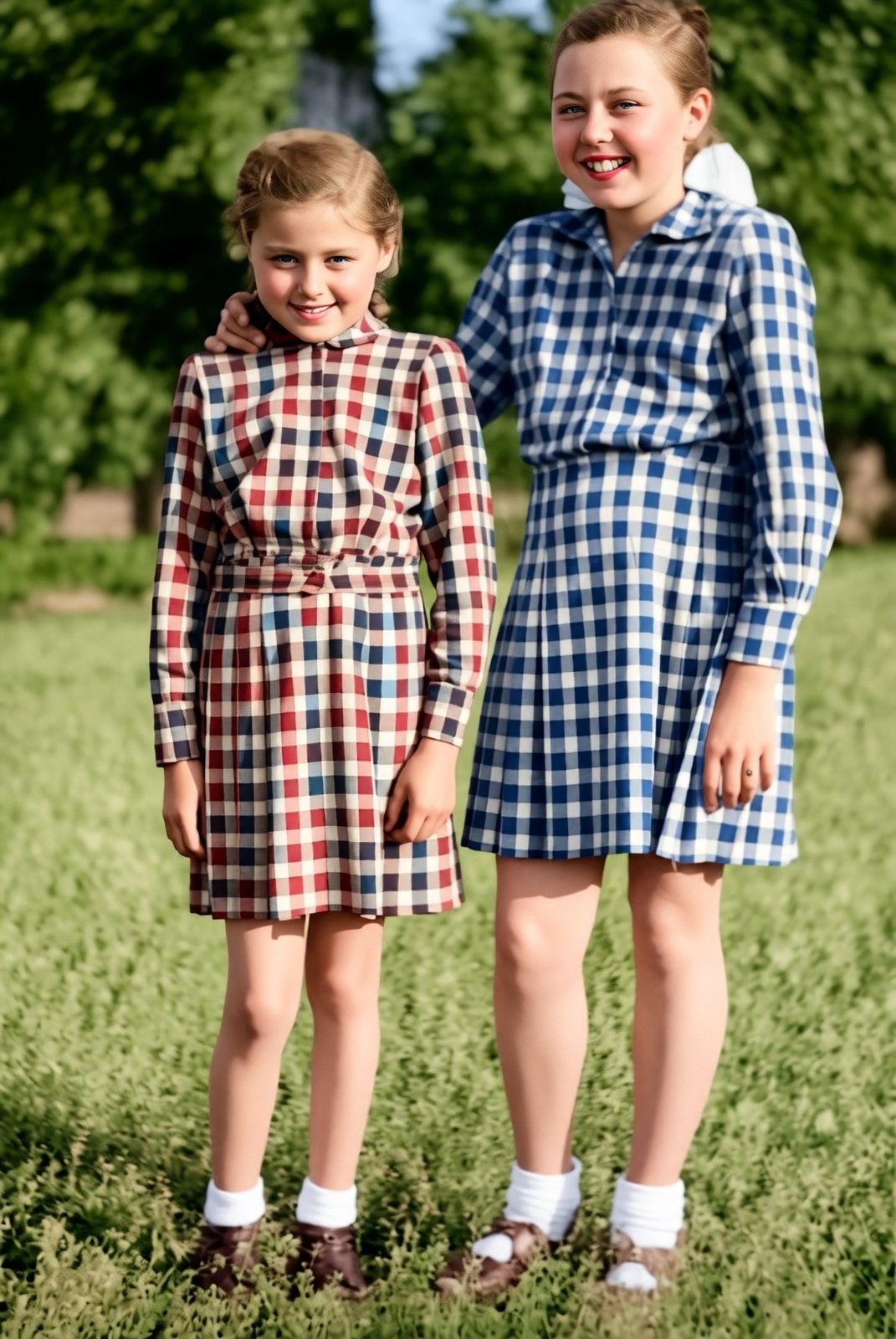
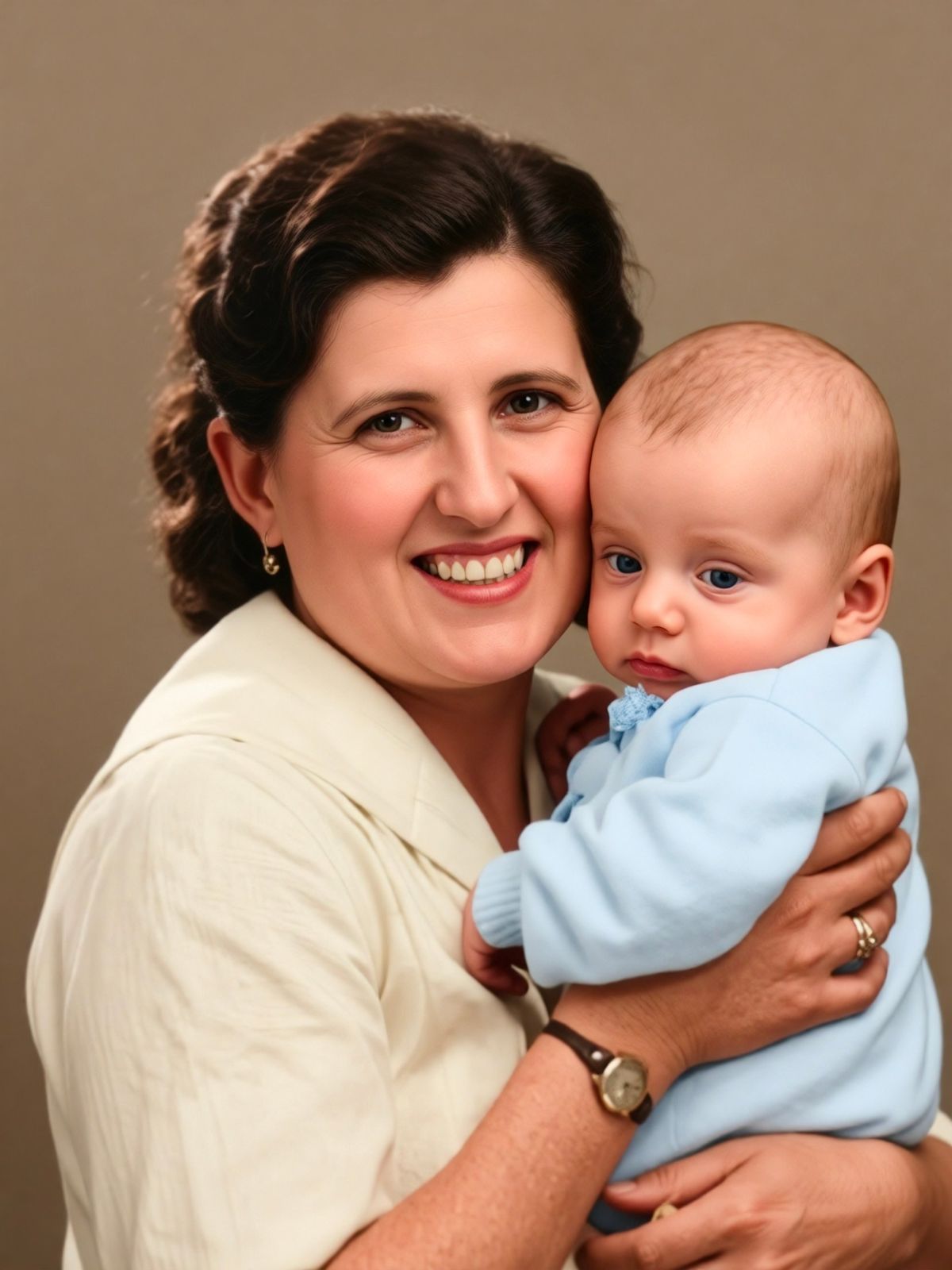
Papp Anna as a young woman.Family collection · later colourised, digitally restored photographPapp Erzsike (1937) and her younger sister, Anna.Family collection · later colourised, digitally restored photograph
Their story began on 5 October 1968 at the Budapest wedding of a mutual family friend, Papp Sanyi; Papp Sanyi’s mother, Irénke néni (“Aunt Irénke”), had been “a sort of substitute sister” to Molnár Lajos’s mother since childhood1. In August 1969 Molnár Lajos, together with his parents, asked for Anna’s hand in Hajdúdorog, and on 6 December 1969 they were married in Debrecen, at the register office on Petőfi tér1. Papp Anna spent her internship year at the hospital in Karcag, then worked as a paediatrician in Kisújszállás and, from 1975, in Debrecen1. They celebrated their golden wedding anniversary on 21 December 2019 in the Greek Catholic church on Rózsák tere in Budapest1. Molnár Lajos died on 24 March 20241.
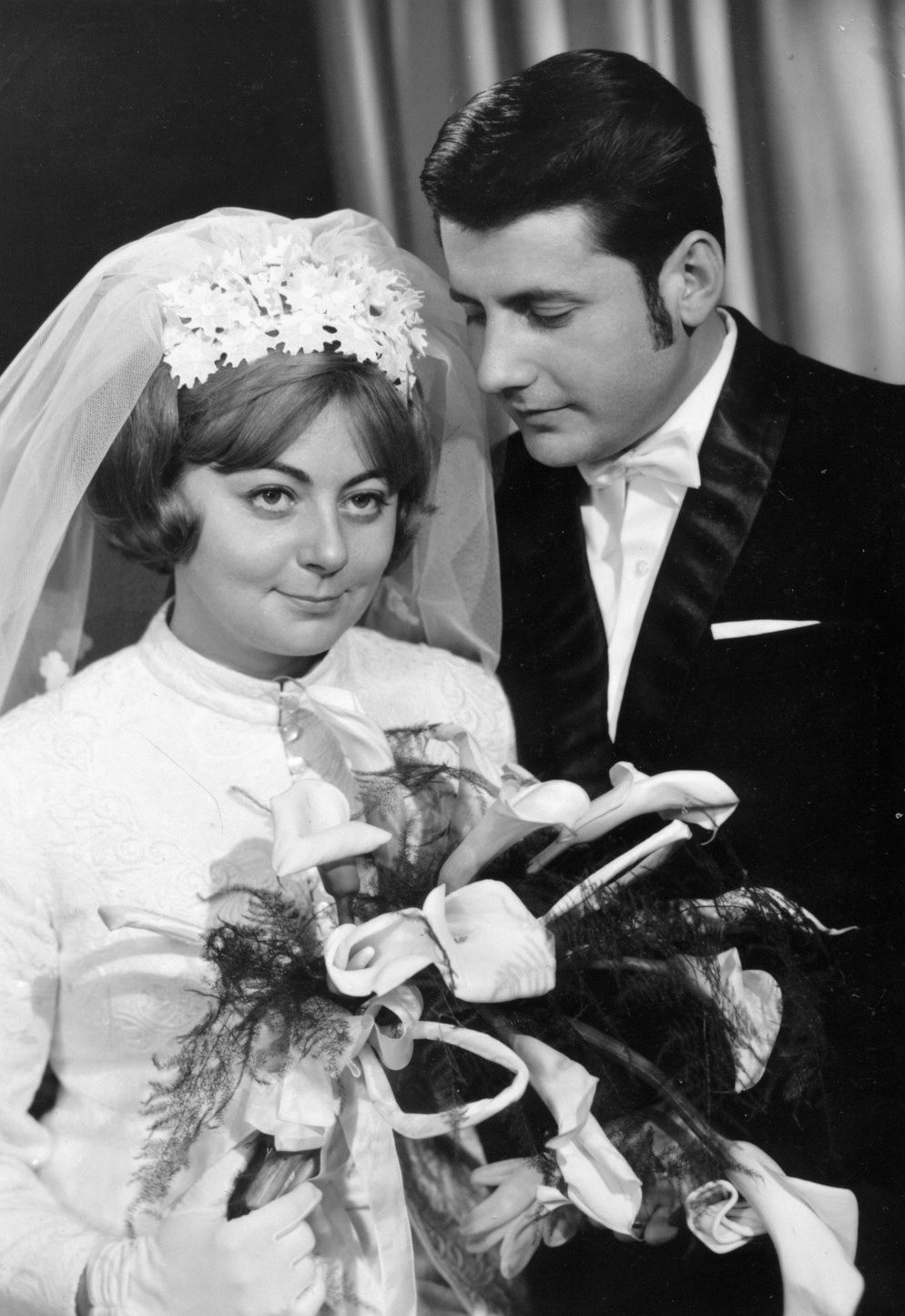
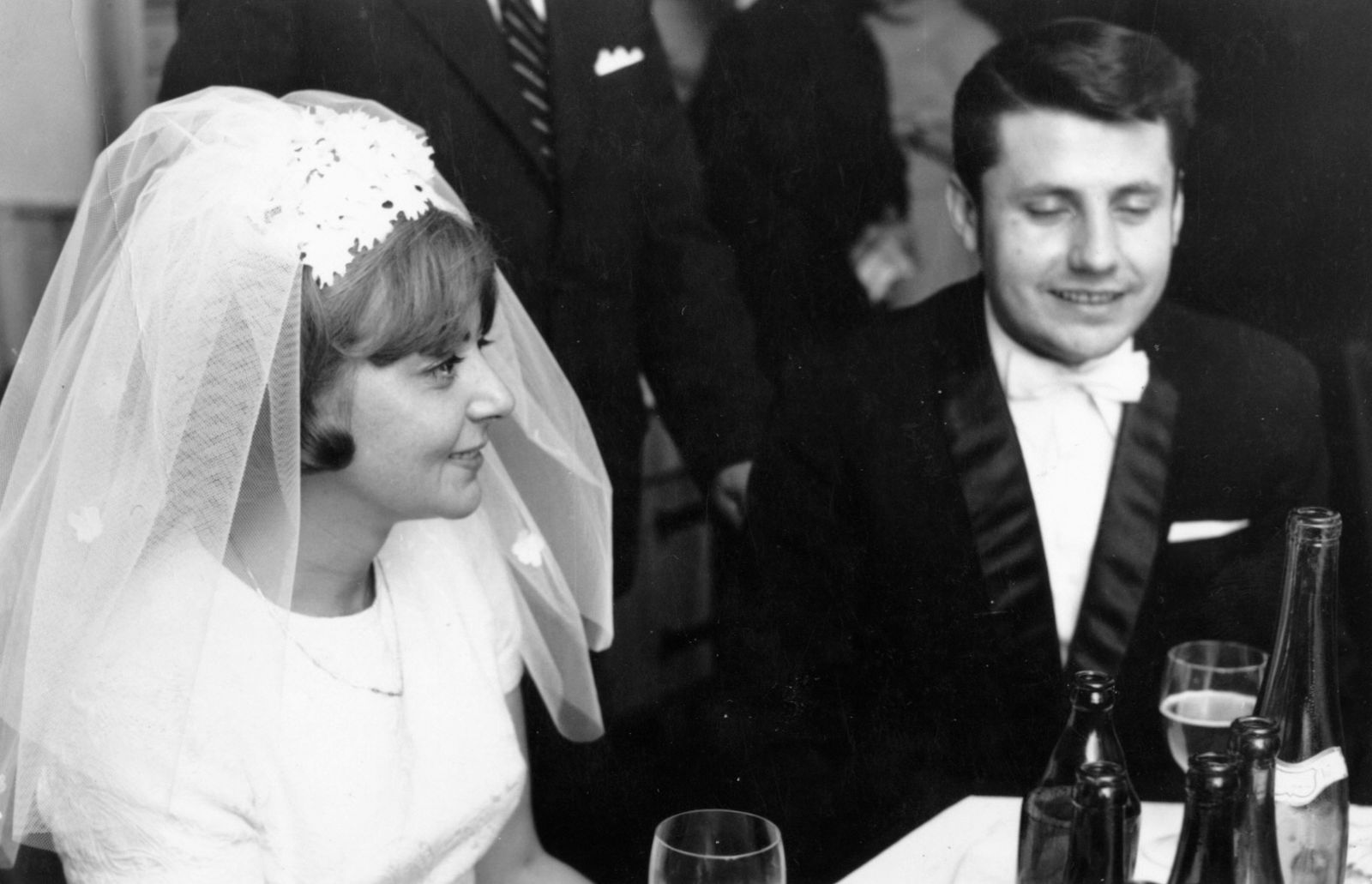
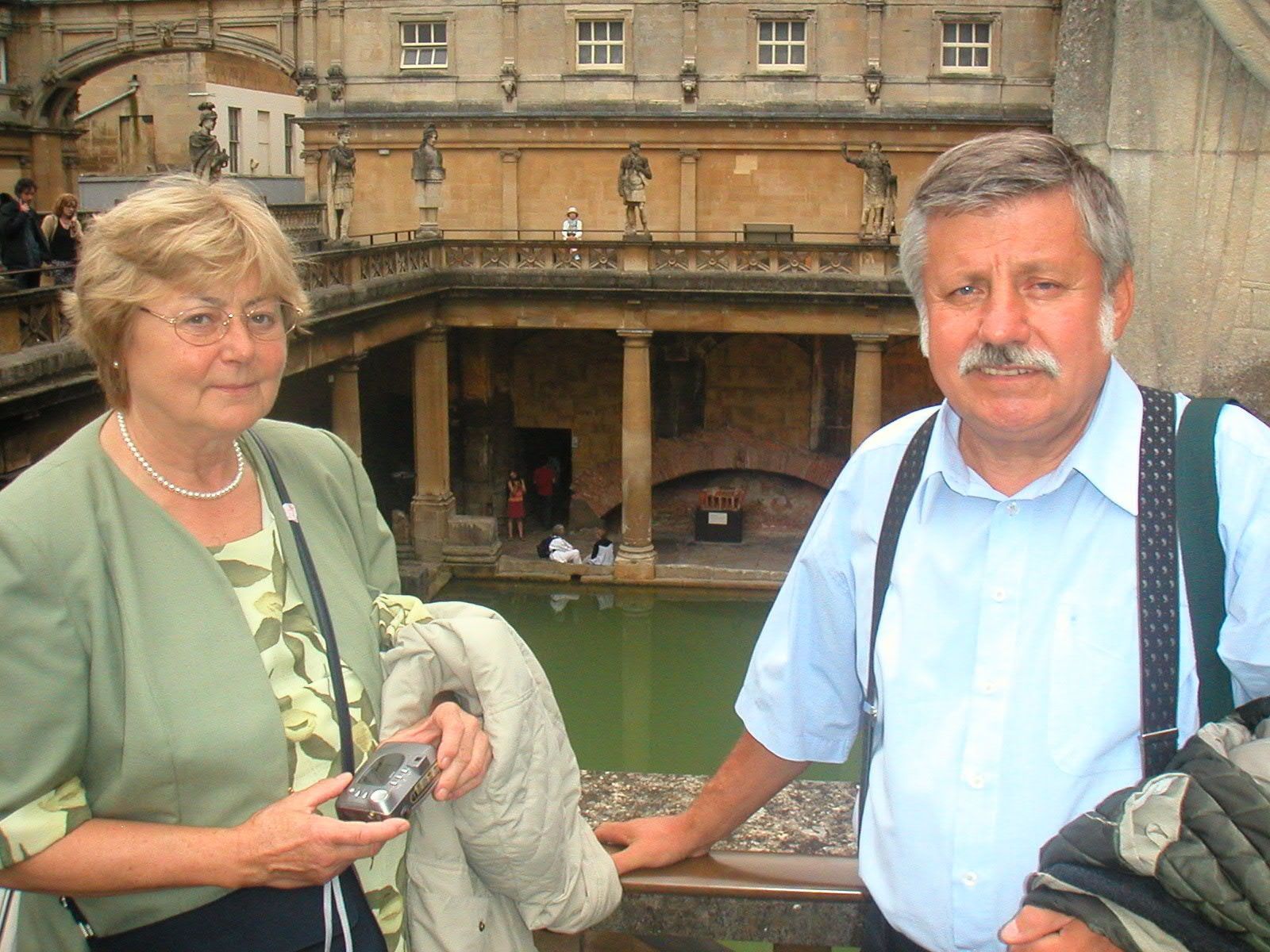
Wedding photograph of Molnár Lajos and Papp Anna, December 1969.Family collectionAt the wedding dinner, 6 December 1969.Family collectionMolnár Lajos and Papp Anna in England, at the Roman Baths in Bath, 2003.Family collection
Hajdúdorog, boys’ school (1949–1955) and mixed school (1955–1957); Budapest, Railway Construction Technical School (Vasútépítési Technikum) (1957–1961, school-leaving examination passed with distinction); the Budapest Technical University (BME), Faculty of Civil Engineering (1962–1967); diploma in transport economics engineering (BME, 1972); doctorate in engineering in the discipline of “Railway Construction” (BME, 1980)1
Career
1961 trainee technician at the Debrecen North Track Maintenance Office of the Hungarian State Railways (MÁV); 1967 practising civil engineer, then section engineer on the Debrecen–Füzesabony line; 1969 chief engineer and deputy head of the Kisújszállás Track Maintenance Office; 1974 deputy head of the construction department and chief engineer of the Debrecen MÁV Directorate; 1988 head of department; 1990 technical director of the Debrecen MÁV Directorate; 1993 head of the track department of the Eastern Hungary Directorate; from 1996 until his retirement, regional head of the MÁV infrastructure division (Pályavasút) in Debrecen1
Honours
Scientific Association for Transport Sciences (Közlekedéstudományi Egyesület), Jáky József Prize (1998); titular railway director (July 2000)1
Marriage
6 December 1969, Debrecen, the wedding hall on Petőfi tér – Dr. Papp Anna (#3)1
Children
Molnár Annamária (1971) and Molnár Gábor (1972) (#1)1
Residences
Hajdúdorog, Sarok u. 12. (1943–1949), Rendház u. 5. (1949–1953), Böszörményi út 12. (1953–1969); Budapest, District VIII, József krt. 16., secondary-school hall of residence (1957–1961); Debrecen, Segner tér (1961–1962); Budapest, District XI, Bartók Béla út 17., university hall of residence (1962–1967); Debrecen, Wesselényi u. 8. (1967–1969); Kisújszállás (1969–1975); Debrecen, Petőfi tér 6. (1975–1988), Patay István u. 30. (from 1988); Budapest, District VI, Benczúr u. 5. (2004–2019), District V, Báthory u. 8. (from 2019)1
Retirement
20 February 2003, after 42 years’ service with MÁV1
her elder sister, Papp Erzsébet (Erzsike, b. 1937), whose husband was Petrus János1
Residences
Budapest, District VII, Akácfa u. 11. (1940–1942), District XIII, Szent István park 10. (1942–1946), District X, Korponay u. 7. (1946–1949), District VIII, Rottenbiller u. 17. (1949–1957), District XIII, Visegrádi u. 38/B (1957–1958), District V, Vigadó tér 3. (1960–1963), District V, Kossuth utca 3. (1963–1964), Üllői út 24., hall of residence (1964–1968), District XIX, Házi (today Vas Gereben) utca 1. (1968–1969); from her marriage onwards, together with her husband1
Studies
residential nurse-training course (1958–1960); graduation as a doctor of medicine in September 1970, in Budapest, at the Erkel Theatre1
Career
1970 practice year at the hospital in Karcag; 1973 paediatric outpatient clinic in Kisújszállás; from 1975 district paediatrician in Debrecen, at the surgery in Bajcsy-Zsilinszky utca; retired in 1995 as acting head of the Health Department of the Debrecen Mayor’s Office1
Marriage
6 December 1969, Debrecen – Dr. Molnár Lajos (#2)1
Historical background · 1914–1949
Between the two world wars: Hajdúdorog and the capital
The Greek Catholic Eparchy of Hajdúdorog was founded by Franz Joseph I on 6 May 1912, and Pope Pius X confirmed it on 8 June 1912 with the bull beginning Christifideles Graecia. The new eparchy comprised 162 parishes, and the church in Hajdúdorog was raised to the rank of cathedralb,c. The bull prescribed Ancient Greek as the liturgical language and allowed three years for the changeover; because of the First World War, however, the deadline was extended, and so Hungarian remained in usea,d. The first bishop, Miklósy István, was consecrated in Hajdúdorog on 5 October 1913a.
On 23 February 1914 a parcel sent from Czernowitz (today Chernivtsi, Ukraine) exploded at the episcopal vicariate in Debrecen: the attack killed the vicar general Jaczkovics Mihály, the secretary Slepkovszky János and the eparchial lawyer Csatth Sándor, while Bishop Miklósy was only slightly injureda. The parcel had been posted by Ilie Cătărău and Timoftei Kirilov, who had links with the Romanian and Russian secret servicesa. The bishop then moved to Nyíregyháza, and the eparchy was administered from therea,b. In the First World War 229 inhabitants of Hajdúdorog lost their livese.
In the spring of 1919 a directorate (direktórium) was formed in Hajdúdorog; its activity was ended by the Romanian occupation of the town on 25 Aprile. In 1933 construction of the Tokaj road (Tokaji út) began, and the Basilian order settled in the town; its monastery was completed in 1942e. The cathedral was renovated in 1937–1938 for the International Eucharistic Congress in Budapestc. Soviet troops entered Hajdúdorog on 1 November; the Second World War claimed 331 victims from Hajdúdorog, many of them civilianse.
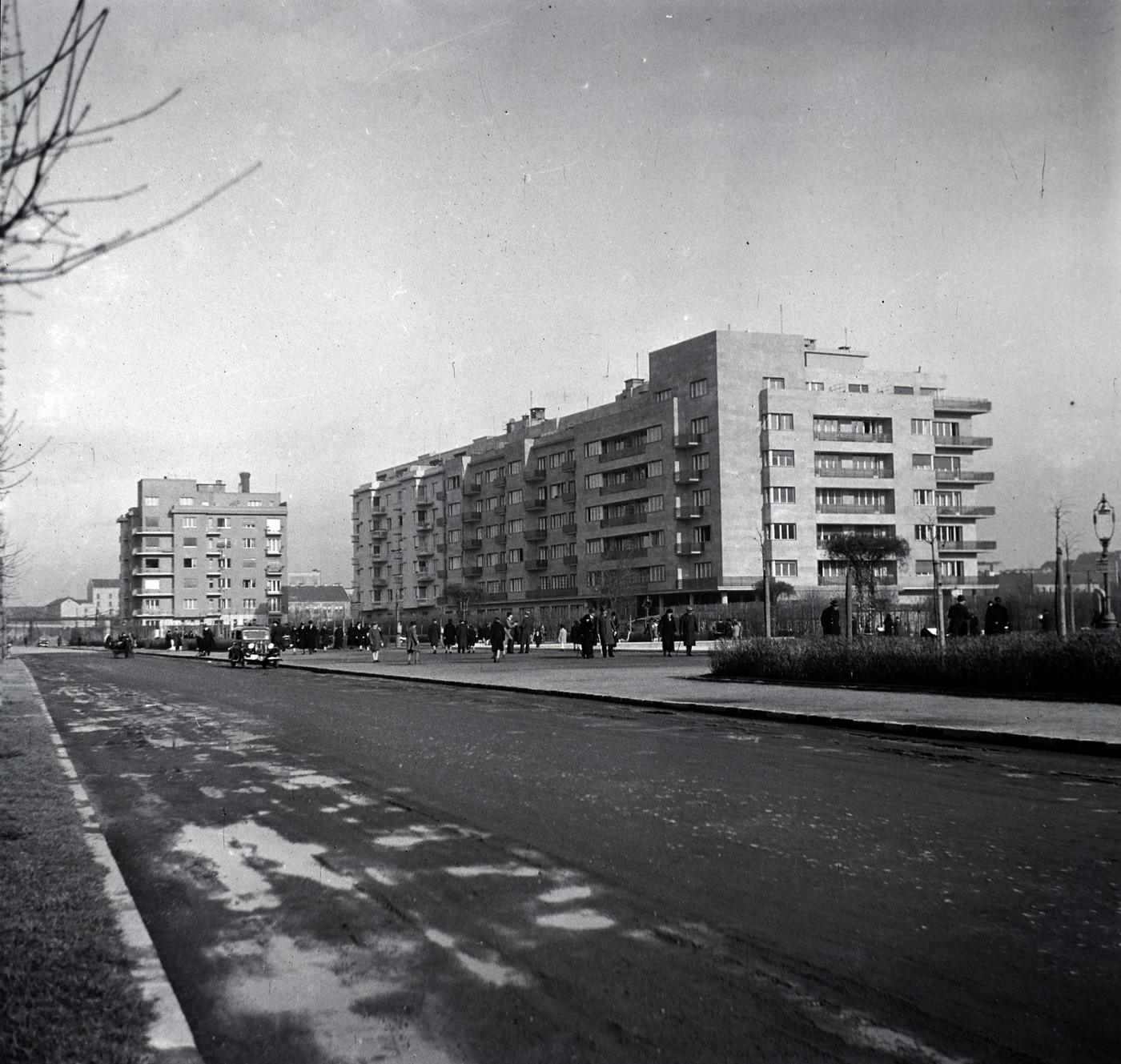
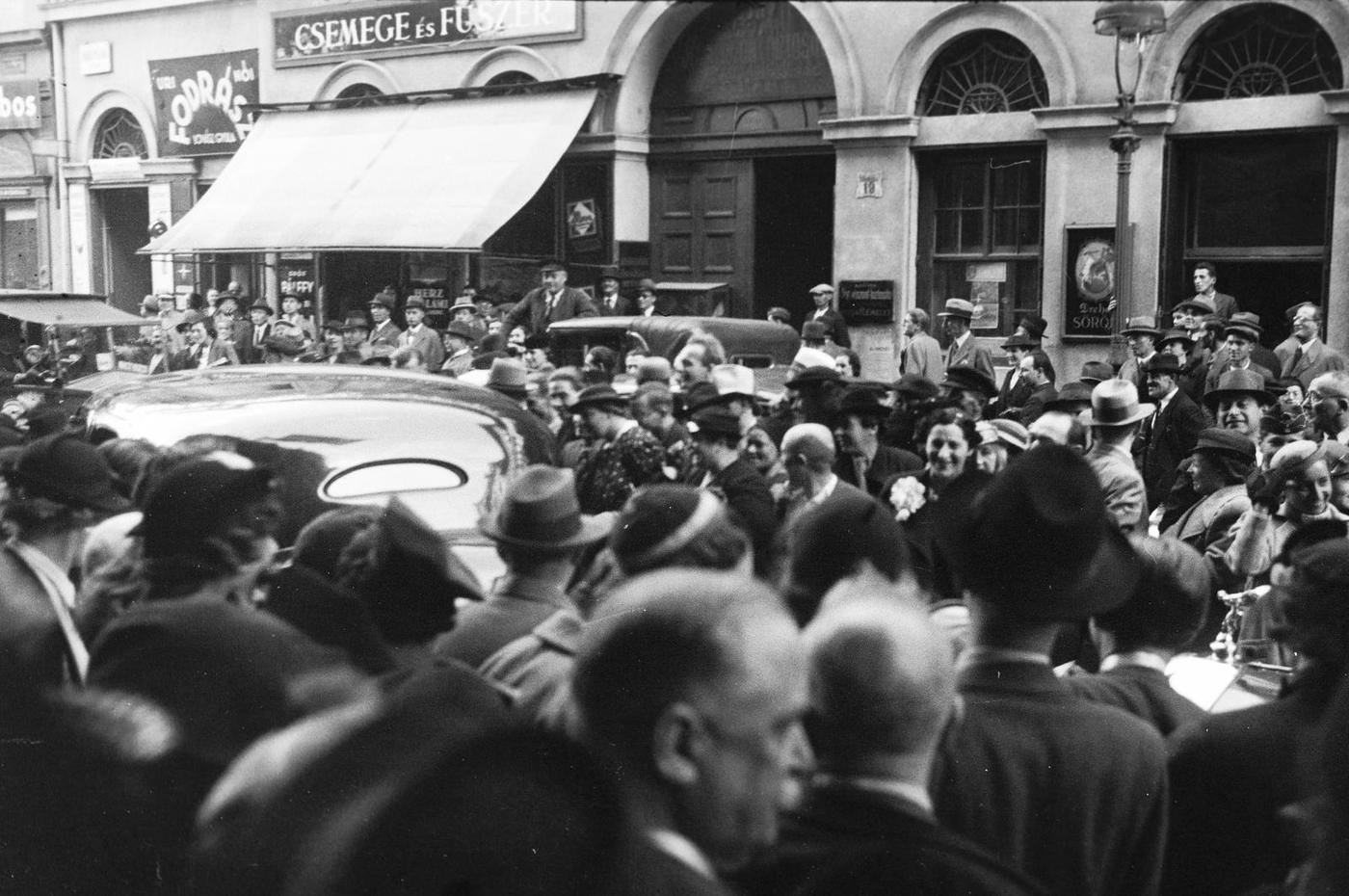
In the 1930s and 1940s the Papp family lived in Budapest: Papp György worked as a journeyman carpenter, and the young family lived in Akácfa utca and then by Szent István park in Újlipótváros3,1. From the end of the 19th century the capital was the main destination for the country’s surplus rural population; it had 1,006,184 inhabitants in 1930 and 1,164,963 in 1941f. Újlipótváros was built up on a former industrial area, and almost all of its buildings date from between 1927 and 1944g; most of the six-storey blocks around Szent István park on the Danube bank were designed by Hofstätter Béla and Domány Ferench. Soviet troops closed the ring around Budapest on 26 December 1944, and the city capitulated on 13 February 1945; the siege claimed some 38,000 civilian lives, and all seven Danube bridges were destroyedi.
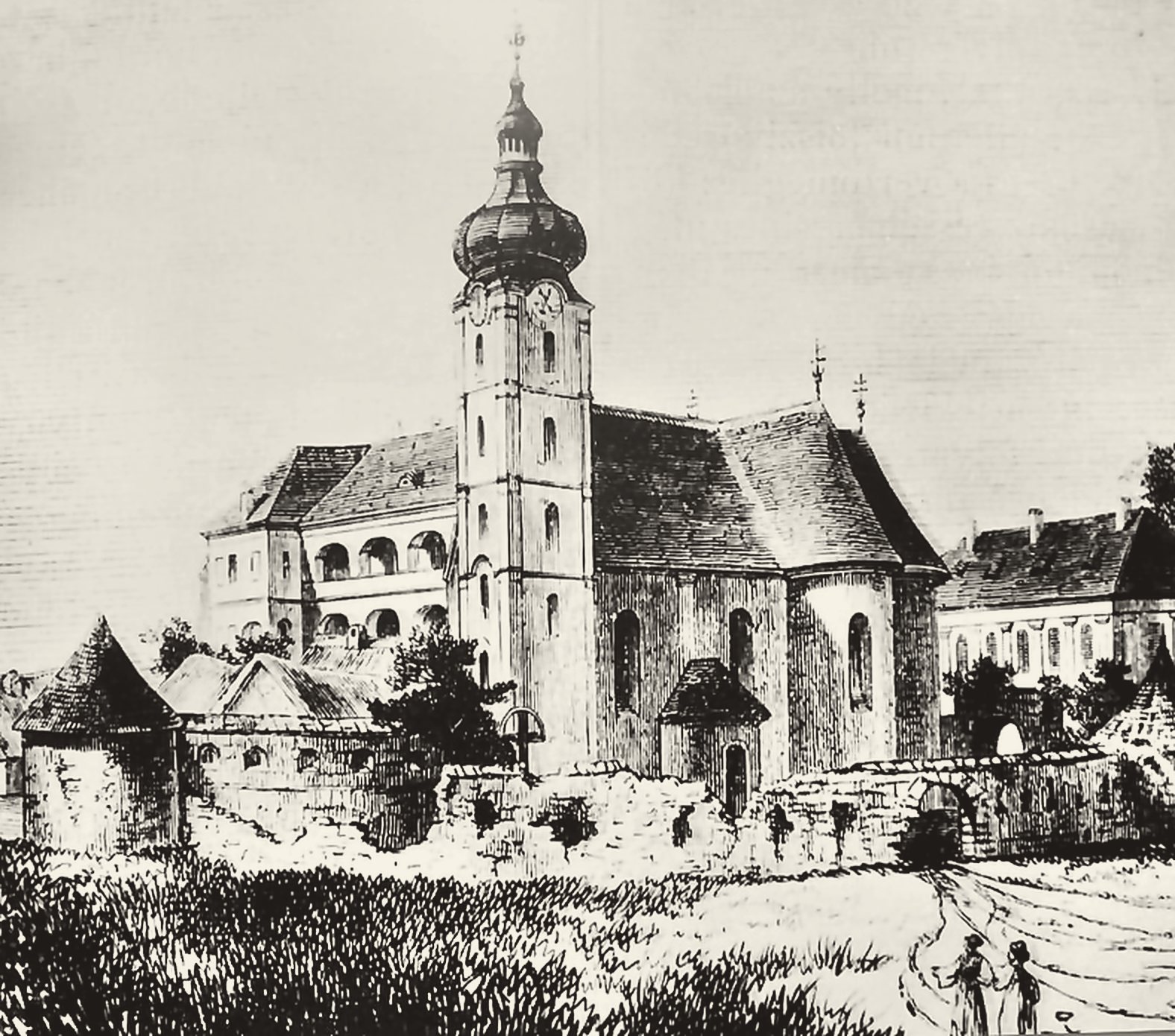
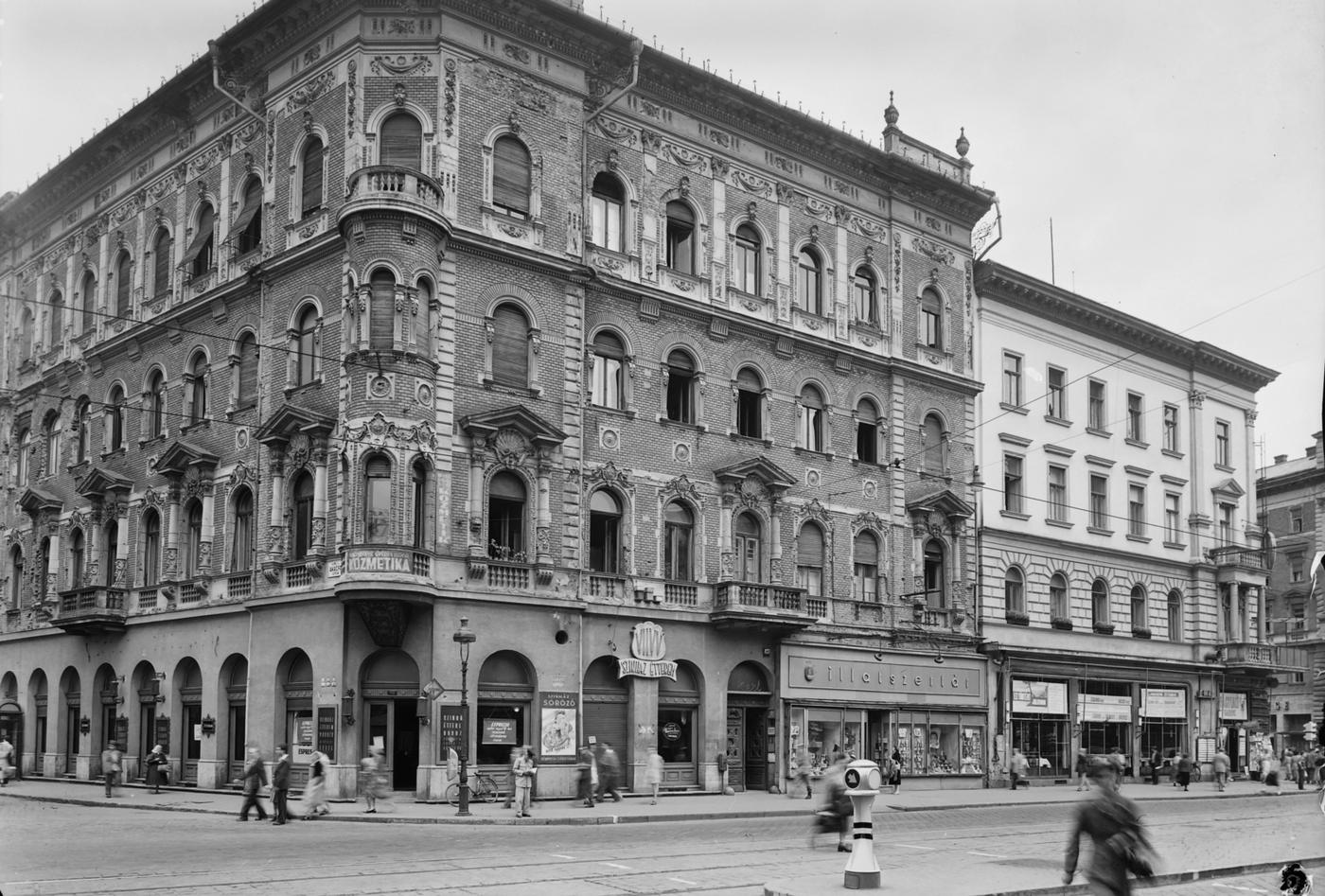
The Greek Catholic church of Hajdúdorog – a cathedral from 1912 – in an old engraving.Reproduction of an old engraving, digitally enhancedThe corner of Akácfa utca and Rákóczi út, 1952. Between 1940 and 1942 the Papp family lived at Akácfa utca 11.1952 · FORTEPAN / UVATERV · CC BY-SA 3.0 · Fortepan 5290The new blocks of flats in Szent István park, Újlipótváros, 1936. Between 1942 and 1946 the Papp family lived at Szent István park 10.1936 · FORTEPAN / Sattler Katalin · CC BY-SA 3.0 · Fortepan 146124
Clicking a Fortepan photograph opens it on the Fortepan website. Terms of use: credit Fortepan and the donor (CC BY-SA 3.0).
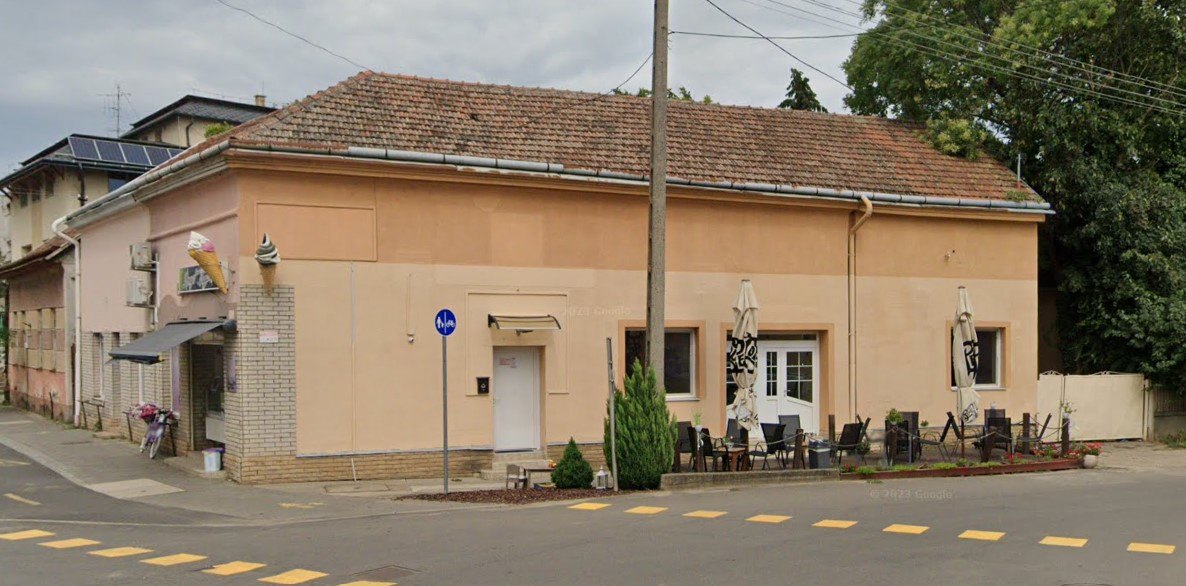
Böszörményi út 12. in Hajdúdorog today. The family lived in this house between 1953 and 1969.Google Street View, 2023
Molnár Lajos was born on 7 January 1911 in Hajdúdorog, in house no. 958; the birth was registered on 11 January by his father, Molnár György, a journeyman bricklayer4. According to the register, the father was 36 and the mother, Orosz Julianna, 28 (according to her marriage entry, Julianna was by then already 29); all three were Greek Catholic4,5. In the family he was called “Szíjkó papa”1.
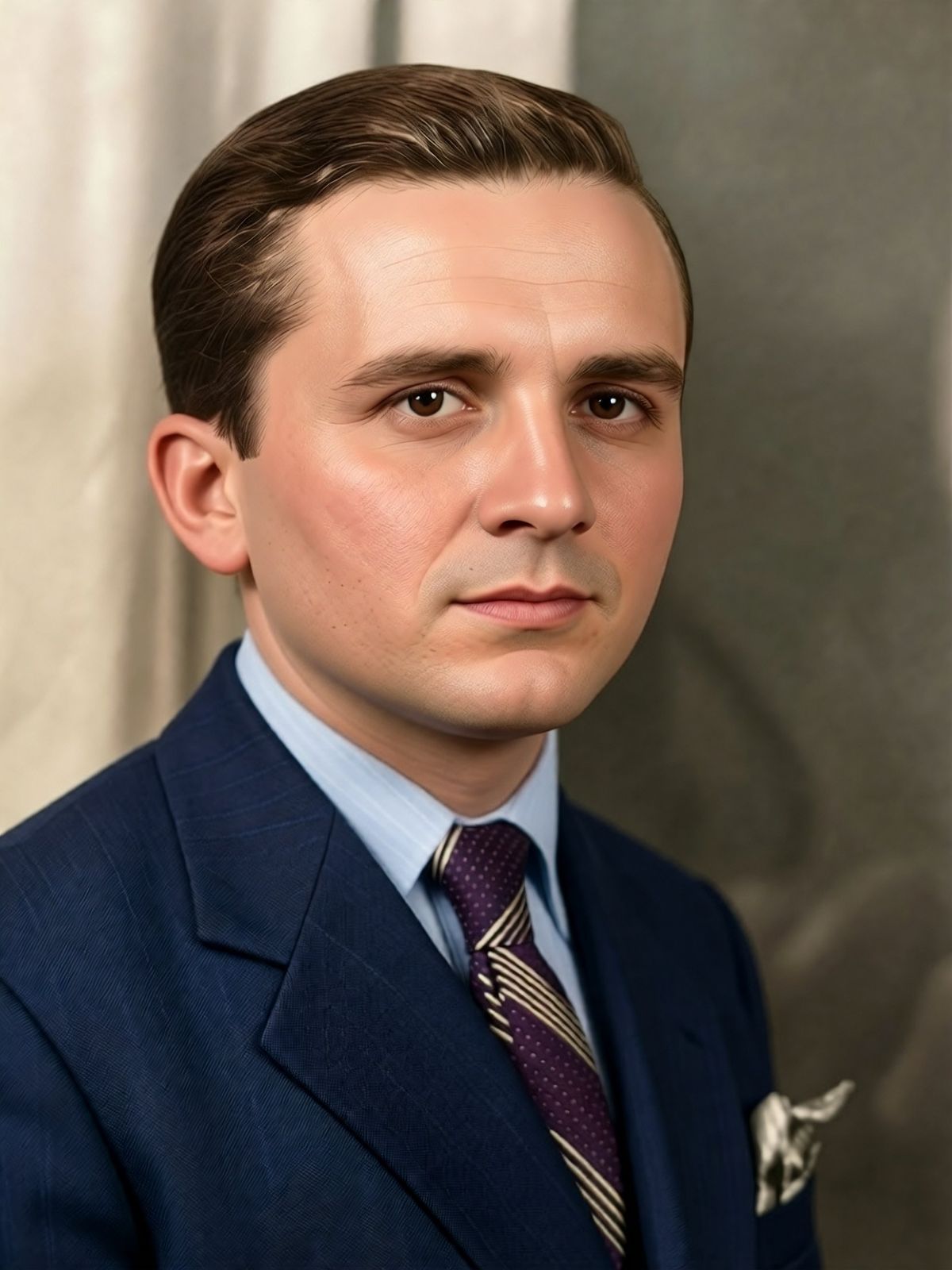
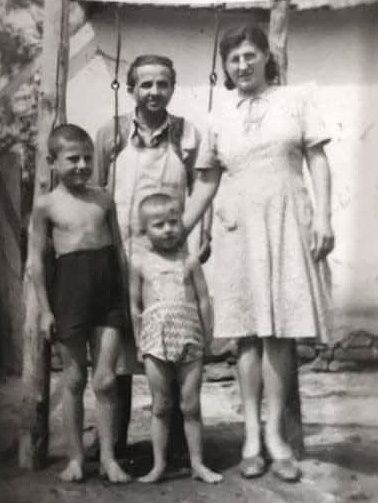
Molnár Lajos as a young man.Family collection · later colourised, digitally restored photographMolnár Lajos and Feldmájer Mária with their sons, Lajos and György, in the late 1940s.Family collection
He was a shoe-upper maker, that is, he made the upper part of shoes, cut from leather and stitched. Between 1946 and 1953 he worked as a self-employed small craftsman, and in the spring of 1953 he joined the shoemakers’ KTSZ1. Hajdúdorog’s first small-industry production cooperative was founded in the autumn of 1949; nationally, the membership of small-industry cooperatives grew almost tenfold between 1949 and 1953a,b. In 1941 he married Feldmájer Mária in Hajdúdorog6; they had two sons, Lajos in 1943 and György in 19451. The family lived at Sarok utca 12. until 1949, then at Rendház (today Ady Endre) utca 5., and at Böszörményi út 12. from 19531.
In May 1944 he too was called up for military service. A school essay by his great-grandson, Molnár Sebestyén – based on his grandfather’s account – preserves the story that his unit was taken into Soviet captivity in Bohemia, near Kolín, and that the prisoners were taken to the liberated camp at Auschwitz, where Molnár Lajos organised the repair of Soviet soldiers’ boots in a 16-man workshop1. When the camp was wound up he travelled on the roof of an overcrowded train, struck his head on a bridge, and at Debrecen the Soviet commander sent him to hospital; this is how he got home to Hajdúdorog in August 19451. In 1947 he was declared a 100 per cent disabled war invalid and received a monthly allowance of 80 forints1.
In 1956 it was he who registered the death of his mother, Orosz Julianna7. His wife died in August 19706. Molnár Lajos died on 26 March 1984, aged 73, at the clinic in Debrecen1. The column for later annotations in his birth entry bears the notation “U.B. 48/1984”, which probably refers to this same event4.
Hajdúdorog, Sarok u. 12. (1943–1949), Rendház (today Ady Endre) u. 5. (1949–1953), Böszörményi út 12. (from 1953)1; 1970: Hajdúdorog, Lenin u. 14.6
Died
26 March 1984, Debrecen, at the clinic, aged 731; in the column for later annotations of the birth entry: “U.B. 48/1984”4
Grandparents · Feldmájer line #5
Feldmájer Mária
Feldmájer Mária (left) as a young woman.Family collection · later colourised, digitally restored photograph
Feldmájer Mária was born on 8 July 1914 in Hajdúdorog, the daughter of Feldmayer József, a joiner, and Baksay Irma Mária6,8; her death entry names her parents as Feldmajer József and Baksai Mária6. (The family memoir gives 9 June1.) Of her parents’ twelve children, eight reached adulthood: seven sons – József, István, Gyula, Sándor, Imre, Lajos and Antal – and a single daughter, Mária1. She was the favourite grandchild of her maternal grandmother, Némeczki Anna – Náni in the family1. In the family she was called Mariska1.
In 1941 she married Molnár Lajos in Hajdúdorog6. The house at Sarok utca 12., their first home, was later bought by her elder brother, Feldmájer István, to help their parents, who then sold their flat in Pest and moved back home to Hajdúdorog1. The records confirm this: when Baksay Irma Mária died in 1958 and Feldmayer József in 1959, both were living at Sarok utca 12.9,10
Feldmájer Mária with little Lajos, around 1943.Family collection · later colourised, digitally restored photograph
In the early 1950s, the years of rationing and compulsory produce deliveries, it was she who saw to feeding the family: good nutrition was especially important for the recovery of her husband, who had fallen ill in the war1. After her husband joined the KTSZ in 1953, she learned the trade of a machine stitcher and worked at home on the family’s sewing machines; this extra income made it possible for her elder son to study in Budapest1.
Feldmájer Mária died on 24 August 1970, aged 56, in Debrecen, at the university clinic at Nagyerdei körút 98.; the death entry gives pneumonia as the cause of death, while according to her son’s recollection she was carried off by a complication of appendicitis6,1. At the time her place of residence was Lenin utca 14., Hajdúdorog6. “She did not live to see her grandchildren,” wrote her son, who took leave of her in his memoirs with these words: “From a distance of half a century, may God bless her beautiful memory, which still shines vividly in my heart!”1
Fact sheet: every known detail with its record (1 person)
#5 Feldmájer Mária 1914–1970Certain
Born
8 July 1914, Hajdúdorog6; according to the family memoir, 9 June1
24 August 1970, Debrecen II, Nagyerdei körút 98. (clinic), aged 56; cause: pneumonia; registered on 25 August, entry no. 11896
Grandparents · Papp line #6
Papp György (“Apa”)
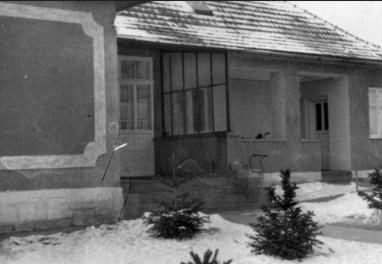
Papp György’s new house in Hajdúdorog, at Fehértói út 36. Family photograph from the family memoir.Family collection
Papp György was born on 23 August 1908 in Hajdúdorog, in house no. 1267; his father, Papp György, an agricultural day labourer, registered the birth the next day11. The register gives the father’s age as 27 and that of the mother, Fodor Julianna, as 23; according to their dates of birth they were 28 and 22 respectively11,12. He lost his mother at the age of nineteen: Fodor Julianna died of pulmonary tuberculosis in 192813.
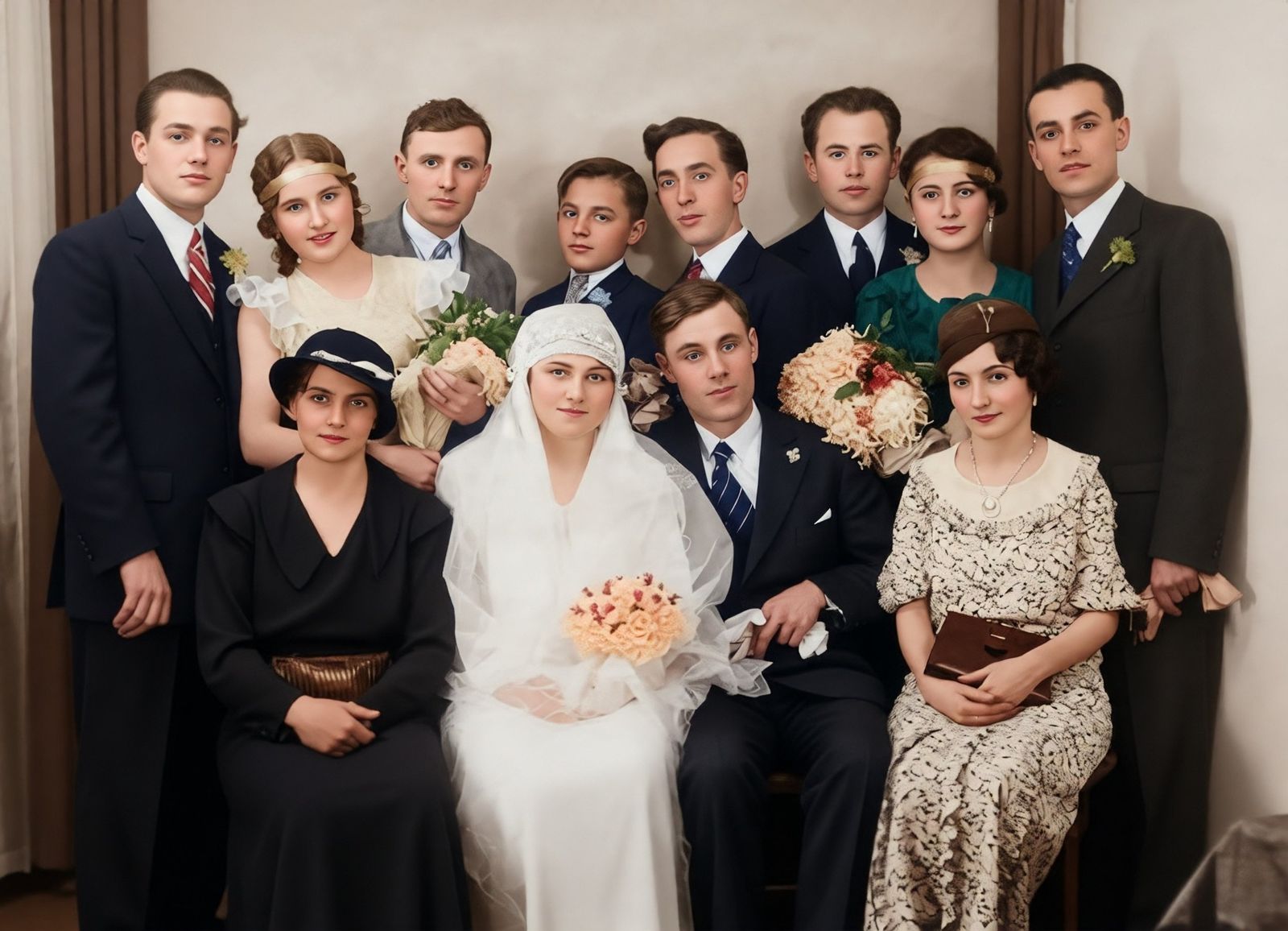
By 1934 he was living in Budapest as a journeyman carpenter, and there, on 18 November 1934, he married Póka Erzsébet, who was also from Hajdúdorog; according to the marriage register the groom lived on Egressy út in District VII[?], the bride on Mária Valéria utca in District V, and the two witnesses, Oláh[?] János and Gyuró[?] Géza, on Horthy Miklós (today Bartók Béla) út in District XI3. According to the family memoir, the young family lived in Akácfa utca from 1940, at Szent István park 10. in Újlipótváros between 1942 and 1946, and then in Korponay utca; of their daughters, Erzsébet (Erzsike) was born in 1937, and Anna was the younger1.
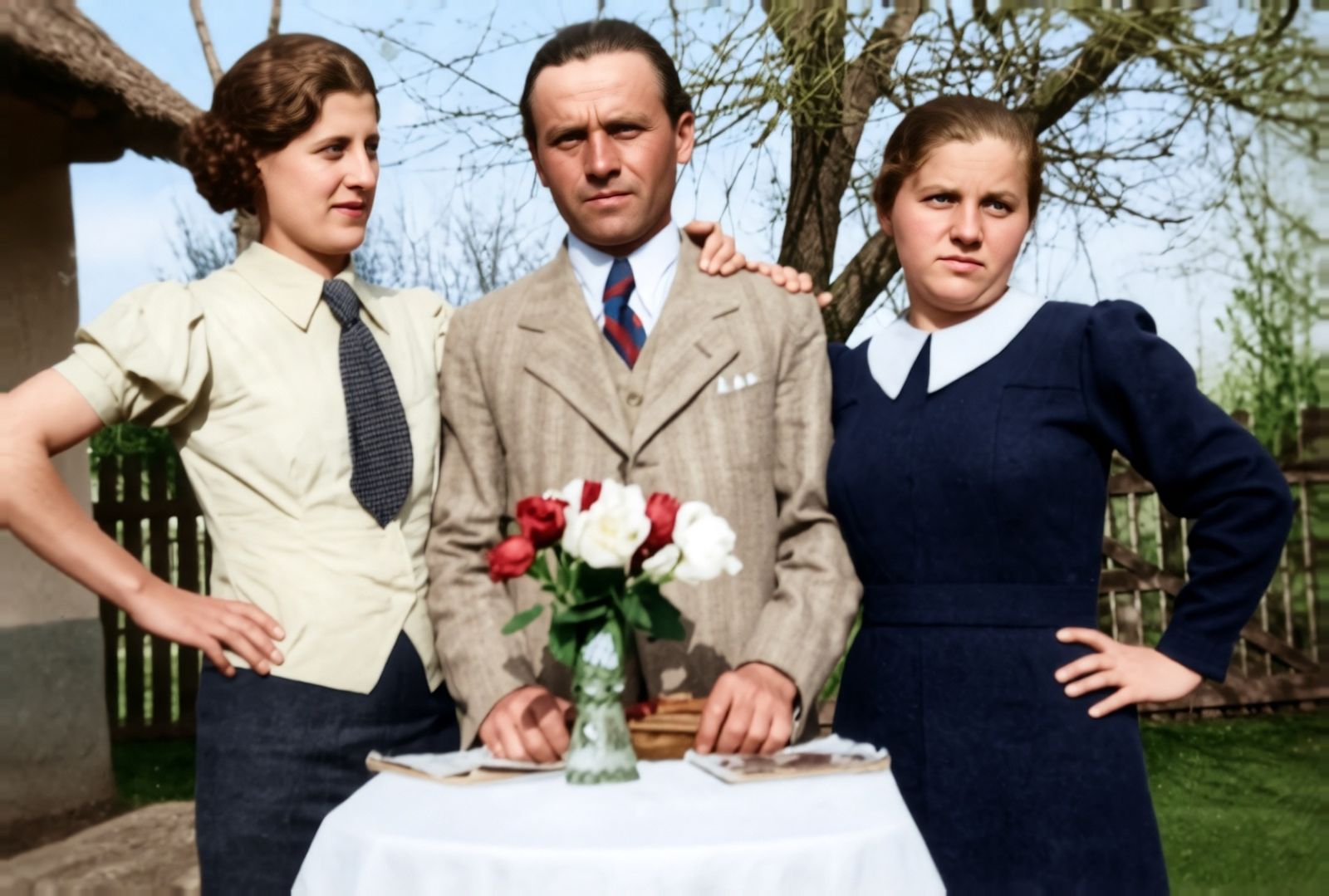
The wedding of Papp György and Póka Erzsébet, Budapest, 18 November 1934.Family collection · later colourised, digitally restored photograph
According to the table of residences in the family memoir, Papp György and Póka Erzsébet lived from 1949 in Hajdúdorog, in the manor house at Fehértói út 36., where Papp György built a new house in 19531. Elsewhere in the memoir, the family’s sideboard reached the house on Fehértói út from the flat in Rottenbiller utca in Budapest only in 19521; the exact year of the move back is therefore not certain. He was a master carpenter; around 1970 he retired from the Hajdúdorog Vegyes KTSZ (general small-industry cooperative), and on the 1,600-square-fathom (négyszögöl) plot he planted an orchard of some 300 fruit trees, which his son-in-law called the “Fehértói út Paradise”1. At the market in Debrecen customers knew him as “Gyuszi bácsi” (“Uncle Gyuszi”); even at the age of eighty-two he still brought the fruit from Hajdúdorog to Debrecen himself, by tractor1.
Papp György died in October 2002, aged 941. The column for later annotations in his birth entry bears the notation “H.B. 178/2002”; on the same page, similar “H.B.” notations refer to death entries11.
Fact sheet: every known detail with its record (1 person)
#6 Papp György 1908–2002Certain
Born
23 August 1908, Hajdúdorog, house no. 1267; registered on 24 August, entry no. 28511
Parents
Papp György, agricultural day labourer (aged 27), and Fodor Julianna (aged 23)11
1934: journeyman carpenter, Budapest3; later master carpenter, until his retirement (around 1970) an employee of the Hajdúdorog Vegyes KTSZ (general small-industry cooperative), then a fruit grower1
Marriage
18 November 1934, Budapest, entry no. 2035 – Póka Erzsébet (#7); witnesses: Oláh[?] János and Gyuró[?] Géza, both of Budapest, District XI, Horthy Miklós út3
1934: Budapest, District VII[?], Egressy út 4.[?]3; Budapest, Akácfa u. 11. (from 1940), Szent István park 10. (1942–1946), Korponay u. 7. (1946–1949), Rottenbiller u. 17.1; Hajdúdorog, Fehértói út 36. (according to the memoir from 1949, or from 1952), where he built a new house in 19531
Died
in October 2002, aged 941; in the column for later annotations of the birth entry: “H.B. 178/2002”11
Grandparents · Póka line #7
Póka Erzsébet (“Anya”)
Mária Valéria (today Apáczai Csere János) utca in Budapest at the entrance to the Dunapalota, 1936. Póka Erzsébet lived in this street in 1934.1936 · FORTEPAN / Inkey Tibor · CC BY-SA 3.0 · Fortepan 306102 ↗
Póka Erzsébet was born on 18 October 1911 in Hajdúdorog (the reading of the month in the register is uncertain), the daughter of Póka Imre and Veres Julianna3. Her father died in 193014; when she married Papp György in Budapest on 18 November 1934, she was living in Mária Valéria utca in the inner city, and her mother was still alive3.
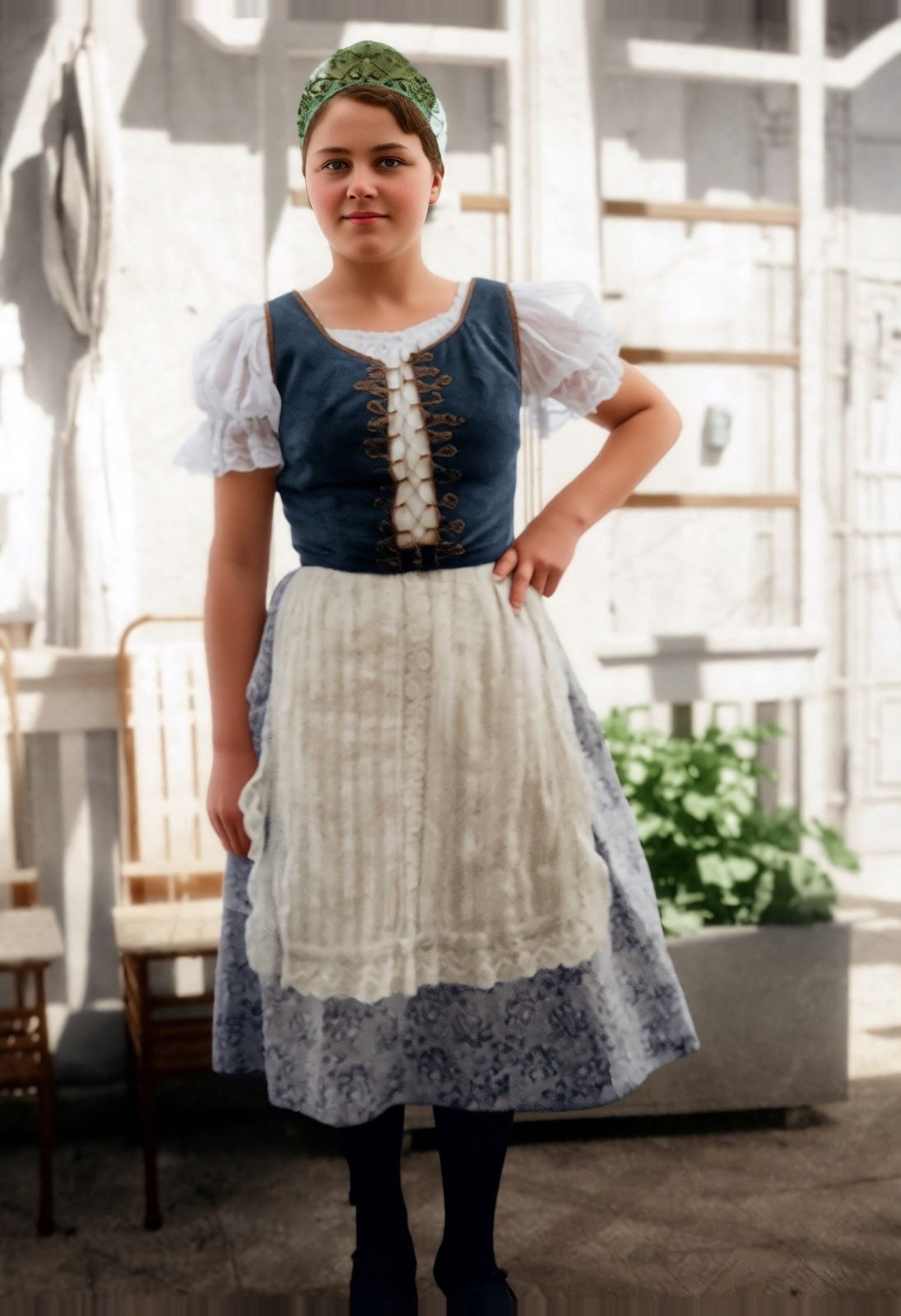
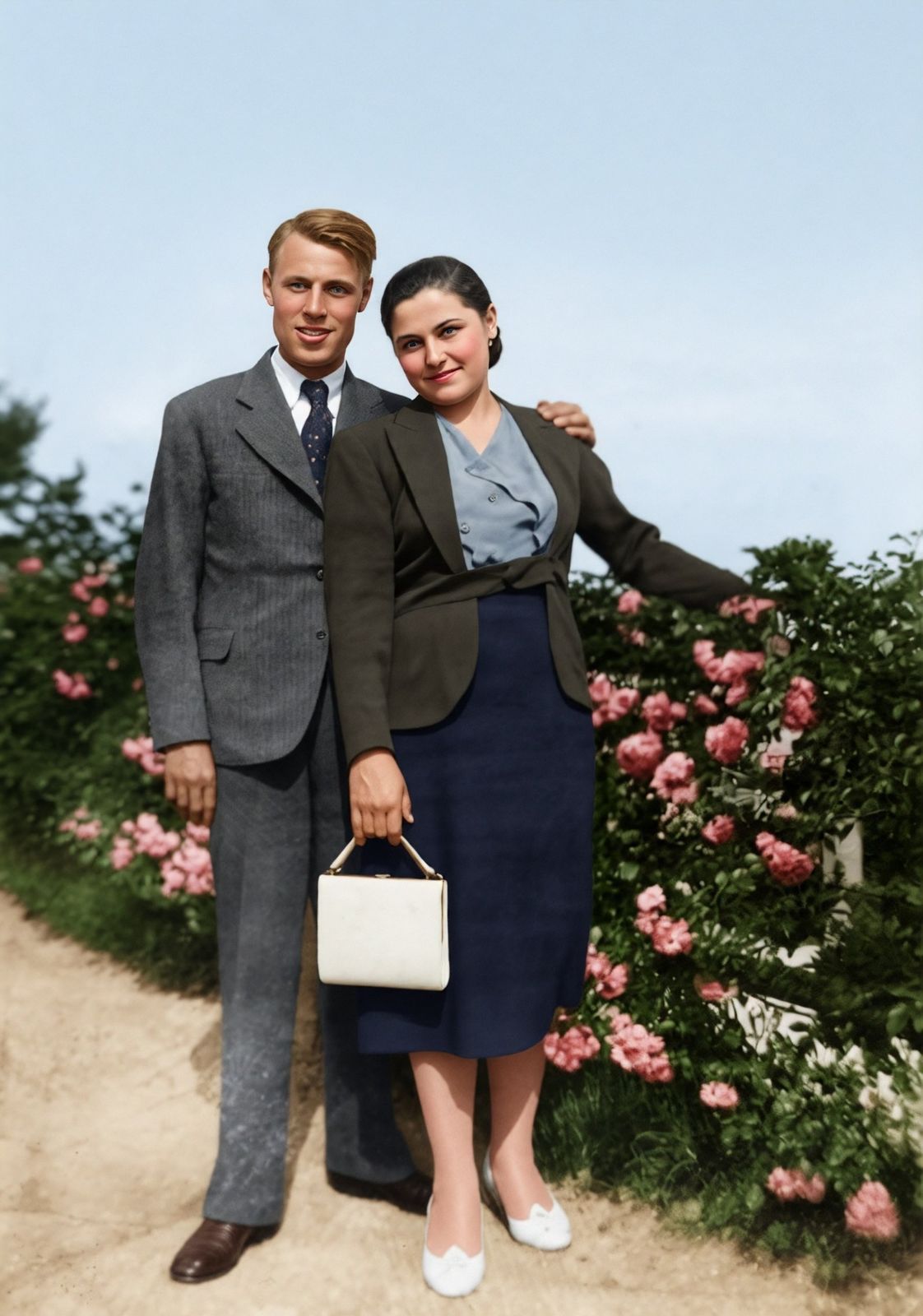
Póka Erzsébet as a young girl, in folk costume.Family collection · later colourised, digitally restored photographPapp György and Póka Erzsébet when young.Family collection · later colourised, digitally restored photograph
The couple moved back to Hajdúdorog between 1949 and 19521. Next to Papp György, it was she who did most of the work in the orchard, and – in her son-in-law’s words – she was “the engine” of the selling at the Debrecen market: during the season she stayed in Debrecen with her daughter’s family until the crates were empty1. Póka Erzsébet died in February 2002, eight months before her husband1. According to the family memoir she was 91; going by the date of birth given in the 1934 marriage entry (18 October[?] 1911), she died aged 903,1.
Fact sheet: every known detail with its record (1 person)
in February 2002; aged 91 according to the family memoir1, aged 90 according to the date of birth in the marriage entry3
Historical background · 1867–1914
From hajdú town to Hajdú County: Hajdúdorog in the era of Dualism
The Hajdú District (Hajdúkerület) was formed in 1609 from the six “old hajdú towns” (öreg hajdúvárosok) of Szabolcs County, Dorog among them; from 1699 its permanent seat was Hajdúböszörménya. Its separate administration was abolished by Act XLII of 1870, and the county reorganisation of 1876 merged it into the new Hajdú County (Hajdú vármegye), whose seat became Debrecena,b. In 1871 Dorog officially adopted the name Hajdúdorog but lost its hajdú privileges; in 1886–1887, because of the high costs, it gave up its town status and became a large village (nagyközség)c. The inhabitants of the hajdú towns enjoyed a distinctive liberty similar to that of the Jassic (jász) and Cuman (kun) peoplesd; Molnár Benjámin also belonged to this milieu – according to the family memoir, the Greek Catholic register recorded him as “nemes” (noble)1.
Hajdú County had 173,329 inhabitants in 1880 and 190,978 in 1891, 99.1 per cent of them Hungarian; in 1891 the county was home to 147,141 Reformed (Calvinist) and 10,999 Greek Catholic believersb. Within the predominantly Reformed county, the overwhelming majority of Hajdúdorog’s population was Greek Catholice, and the community was the most populous in the Eparchy of Munkácsf. The great Pallas encyclopaedia (A Pallas nagy lexikona) described Hajdúdorog as a large village of 8,720 Hungarian inhabitants, with a savings bank, a railway station, and a post and telegraph officeg.
The settlement’s first trade association (ipartestület), the Hajdúdorog Bootmakers’ Association (Hajdúdorogi Csizmadia Ipartestület), was founded in 1873, and in 1877 the first credit institution was establishedc. The Debrecen–Hajdúnánás railway line was opened on 24 August 1884c. In 1891 the Hajdúdorog Savings Bank Company (Hajdúdorogi Részvénytakarékpénztár) opened, in 1911 the Hajdúdorog Steam Brickworks (Hajdúdorogi Gőztéglagyár) was founded, and the first paved road was completedc. Civil registration came into force on 1 October 1895: from then on births, marriages and deaths were recorded by the municipal registrarh. Most of the records in this family history are such civil register entries; it was in this small-town world of craftsmen that the Feldmayer master joiners, the master bootmaker Papp György and the master butcher Baksay István worked8,15,16.
Hajdúdorog was the centre of the movement for a Hungarian-language Greek Catholic liturgy. The first general assembly of Hungarian Greek Catholics was held here on 16–17 April 1868, attended by representatives of 33 parishesf,i. Instead of an independent bishopric, in 1873 the government authorised a vicariate at Hajdúdorog (hajdúdorogi külhelynökség)j. In 1882 a Hungarian translation of the Liturgy of St John Chrysostom was published in Debrecenj, and on 9 March 1900 Pope Leo XIII received the movement’s group of pilgrims, which included 45 people from Hajdúdorogc.
The history of Hajdúdorog and of the Hungarian Greek Catholics is described in detail in the volume Hajdúdorog, 1868–2018. Tanulmányok és források a magyar görögkatolikusok történetéhez (‘Studies and sources on the history of the Hungarian Greek Catholics’), which is also available online: download the volume (PDF) ↗.
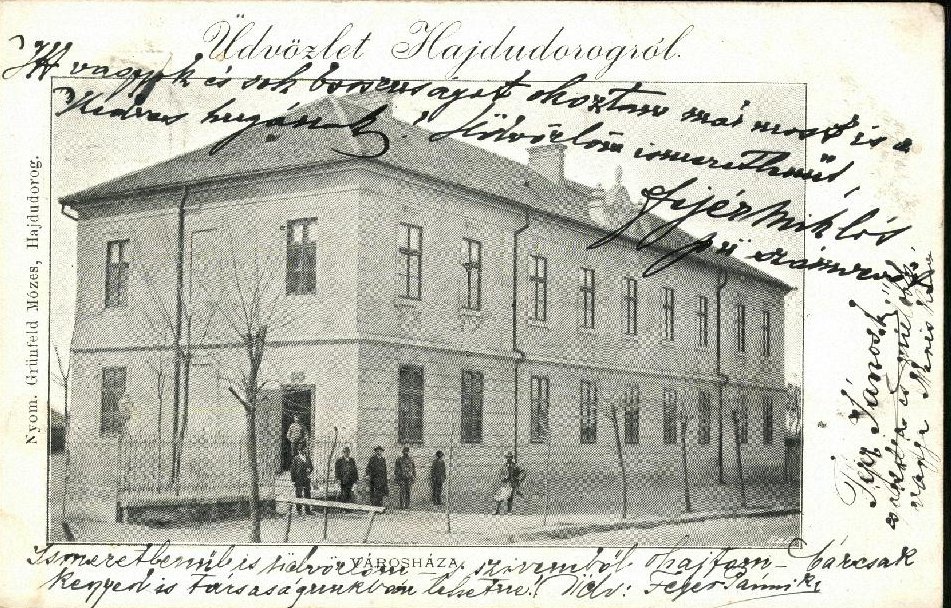
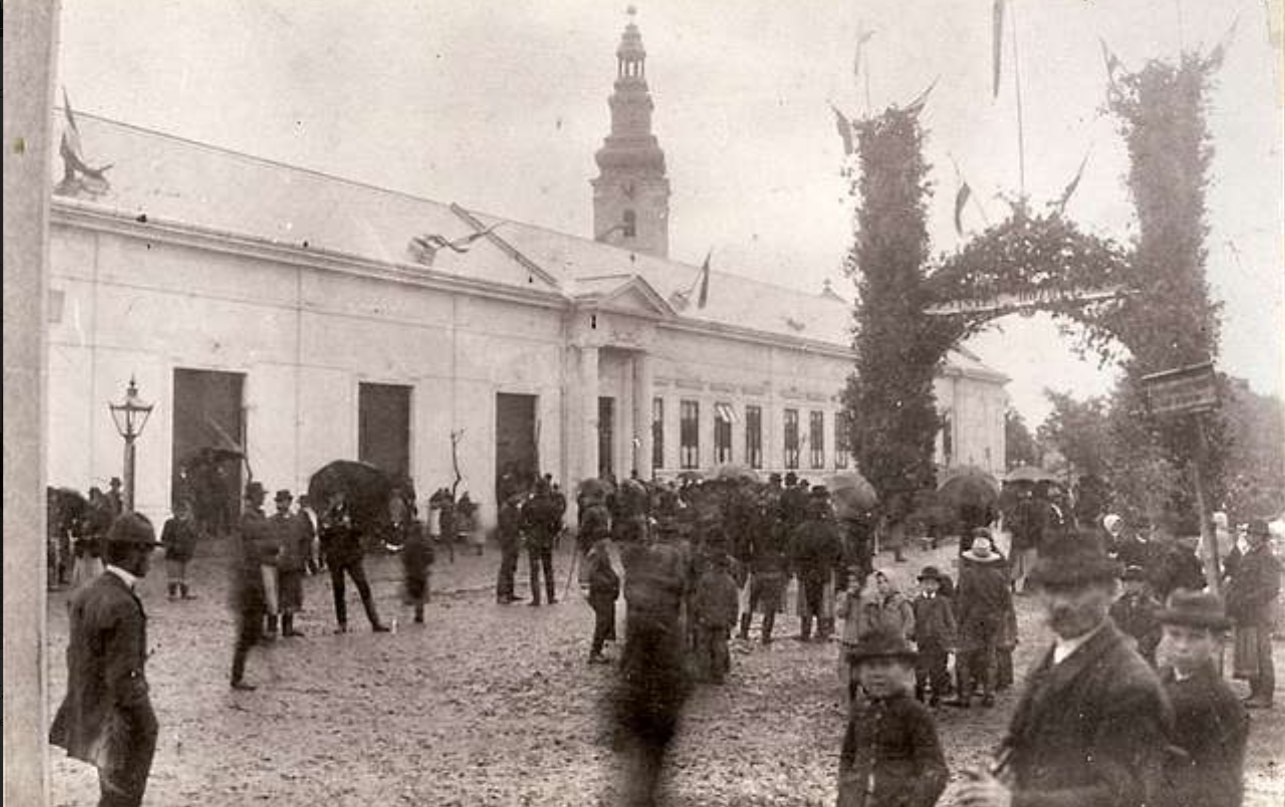
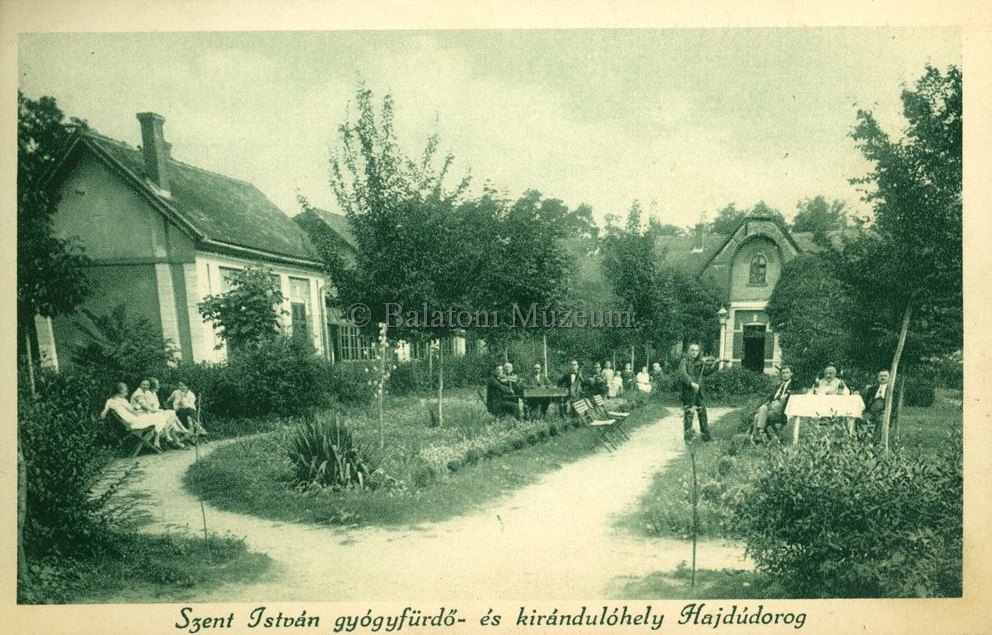
Hajdúdorog town hall on a period postcard (“Üdvözlet Hajdudorogról” – “Greetings from Hajdudorog”), from the Hajdúdorog printing works of Grünfeld Mózes.Period postcardA festive decorated arch and a crowd in Hajdúdorog, with a church tower in the background. Period photograph.Period photographThe Szent István medicinal baths and excursion spot in Hajdúdorog, on a period postcard.Postcard · Balatoni Múzeum / MaNDA · CC BY-NC-ND 4.0 · source ↗
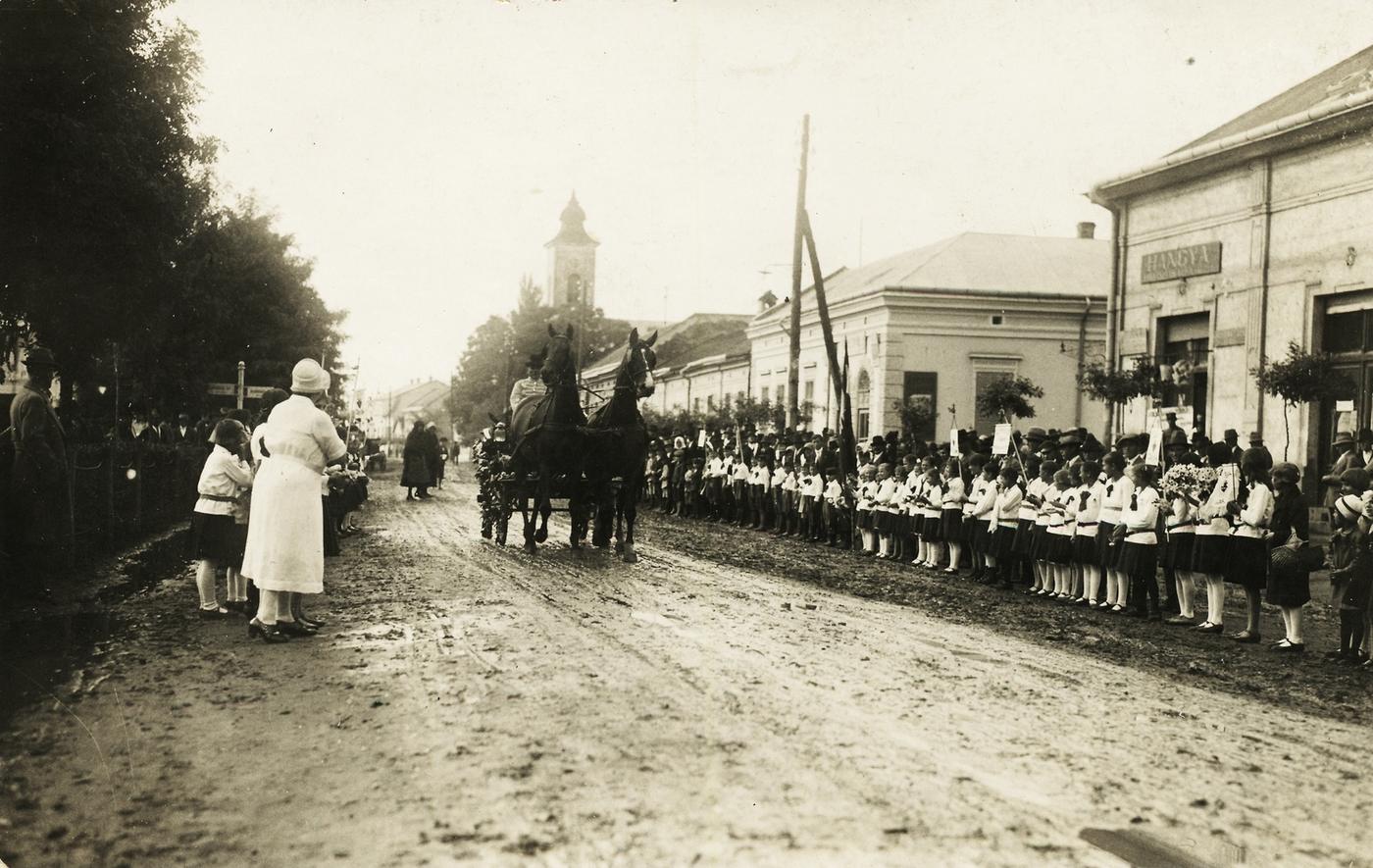
Hajdúdorog, Tokaji út looking towards Böszörményi út, 1925. People lining the street for a festive occasion, with a church tower in the background.1925 · FORTEPAN / Jurányi Attila · CC BY-SA 3.0 · Fortepan 115067 ↗
Molnár György was born on 8 May 1874 in Hajdúdorog, the son of Molnár Benjámin, a smallholder, and Korondán Krisztina5. (The family memoir gives 18751.) His mother died early – according to family memory, shortly after the birth, and the baby’s life was saved by a young mother next door who breastfed him1. His father married twice more; the third wife “made her stepson’s life so very bitter that he preferred to escape into marriage”1.
Orosz Julianna was born on 11 August 1881 in Hajdúdorog, the daughter of Orosz István, a smallholder, and Szilágyi Krisztina; her father died in August 1898, a little over a year before the wedding5,17. The marriage took place on 20 November 1899 in Hajdúdorog, before the registrar Farkas Győző: the groom was 25, “kisbirtokos atyja mellett segítő családtag” (a family member assisting his smallholder father), and the bride an 18-year-old housewife5. (The family memoir has Orosz Júlia born in 1883 and names her father as Orosz János1.)
Molnár Lajos and his mother, Orosz Julianna, before 1956.Family collection · digitally restored photograph
Molnár György worked as a journeyman bricklayer and later as a bricklayer; in 1911 they lived in house no. 958, and in 1927 in house no. 8914,18. They had seven children, four of whom reached adulthood: György (1904), Lajos (1911), Ferenc (1914) and Margit (1918)1. Molnár György died of pneumonia on 22 January 1927, aged 5218. Orosz Julianna lived as a widow for almost thirty years; she died on 6 May 1956, when she was living at Fehértói utca 31., and her death was registered by her son, Molnár Lajos7. In 1957 the death was also noted in the margin of the marriage register5.
Fact sheet: every known detail with its record (2 people)
#8 Molnár György 1874–1927Certain
Born
8 May 1874, Hajdúdorog5; according to the family memoir, 18751
Parents
Molnár Benjámin, smallholder, and the late Korondán Krisztina5
6 May 1956, Hajdúdorog, a widow; cause: arteriosclerosis, myocardial degeneration; reported by her son, Molnár Lajos7; in 1957 the death was also noted in the margin of the marriage register5
Great-grandparents · Feldmájer line #10, #11
Feldmayer József and Baksay Irma Mária
Feldmayer József was born on 29 January 1875 in Hajdúdorog8,10; his marriage entry records him as Roman Catholic8. His father, also named József, was an independent master joiner, and his mother was Káldy Zsuzsanna8. According to the family memoir, the child was still registered under the name Josef Pfeilmajer; the marriage entry already gives Feldmayer József, and from then on the family used this form of the name for good1,8. He too became a joiner – the third generation in the family1.
Baksay Irma Mária was born on 14 March 1878 in Hajdúdorog, in house no. 481, the daughter of Baksay István and Némeczky Anna; she was baptised the next day in the Greek Catholic church by the curate Dudits Imre19. Their wedding took place on 24 July 1898 in Hajdúdorog: the groom was a 23-year-old Roman Catholic journeyman joiner, the bride a 20-year-old Greek Catholic housewife; the witnesses were Révész Mihály, a savings-bank bookkeeper, and Rajk Gergely, a village shopkeeper8.
Of their twelve children, eight reached adulthood: József, István, Gyula, Sándor, Imre, Mária, Lajos and Antal1. Feldmayer József had acquired such a command of German from his father that during the German occupation of Hajdúdorog he was able to act as the Germans’ interpreter1. For a time they lived in Budapest; around 1950 they sold their flat in Pest and moved back to Hajdúdorog, to Sarok utca 12., which their son István had bought for them1. Baksay Irma Mária died on 31 March 1958 and Feldmayer József on 11 February 1959; both were living at Sarok utca 12., and both deaths were registered by their son, Feldmayer István9,10.
Fact sheet: every known detail with its record (2 people)
#10 Feldmayer József 1875–1959Certain
Born
29 January 1875, Hajdúdorog8,10; according to the family memoir, he was registered under the name Josef Pfeilmajer1
Parents
Feldmayer József, independent master joiner, and Káldy Zsuzsanna8
24 July 1898, Hajdúdorog – Feldmayer József (#10)8
Died
31 March 1958, Hajdúdorog (residence: Sarok u. 12.); cause: old age; reported by her son, Feldmayer István9
Note
The family memoir calls her “Mária Irénke”1; in the records she appears as Irma Mária9,8.
Great-grandparents · Papp line #12, #13
Papp György and Fodor Julianna
Papp György was born on 6 June 1880 in Hajdúdorog, the son of Papp György, an independent village shopkeeper, and Domokos Anna12,20. Fodor Julianna was born on 5 December 1885, the daughter of Fodor János, a farm carter, and Hajdu Julianna12. They married on 14 November 1905 in Hajdúdorog: the groom was an agricultural day labourer, the bride a domestic servant12. The entry does not mark the groom’s mother as deceased, although Domokos Anna had already died in 189912,15.
Their only known child, György, was born in 1908 in house no. 126711. Fodor Julianna died of pulmonary tuberculosis on 4 June 1928, aged 42; her death was registered by her husband13. Papp György lived as a widower for 35 years: he died in Hajdúdorog on 7 September 1963, when he was living at Fürdő utca 60.20
His younger brother, Papp Mihály, a journeyman machine fitter, married Oláh Anna in 1911; one of the witnesses at the wedding was Fodor János21. Papp Mihály died in Debrecen on 23 July 195321.
Fact sheet: every known detail with its record (2 people)
4 June 1928, 4 p.m., Hajdúdorog 1440., aged 42; cause: pulmonary tuberculosis; reported by her husband13
Great-grandparents · Póka line #14, #15
Póka Imre and Veres Julianna
Póka Imre was born on 4 April 1871 in Hajdúdorog; according to the 1897 marriage entry his father was the late Póka György, village swineherd, and his mother Rosnyai Márta, who had remarried by then22. Veres Julianna was born on 16 April 1880, the daughter of Veres Mihály, an agricultural day labourer, and Kompár Mária; her widowed mother was a worker at the tobacco purchasing office22.
Their wedding took place on 8 February 1897 in Hajdúdorog: the groom was a 25-year-old agricultural day labourer, the bride a 16-year-old domestic servant; the witnesses were Pajna János, a smallholder, and Ancsán László, an independent master szűr-maker (tailor of traditional felt cloaks), and the bride and groom also signed the entry in their own hand22. Their daughter, Erzsébet, was born in 19113.
Póka Imre died of stomach cancer on 18 November 1930, aged 5914. His death entry – unlike the 1897 marriage entry – names his father as Póka Imre14,22. Veres Julianna was still alive in 19343; the date of her death is not known.
Fact sheet: every known detail with its record (2 people)
the late Póka György, village swineherd, and Rosnyai Márta, by then “…urgyai[?] Györgyné” (i.e. the wife of …urgyai György)22; in 1930: the late Póka Imre and the late Rozsnyai Mártha14
8 February 1897, Hajdúdorog, entry no. 9 – Veres Julianna (#15); witnesses: Pajna János, smallholder (47), and Ancsán László, independent master szűr tailor (maker of traditional felt cloaks) (38)22
The foundation stone of Hajdúdorog’s Greek Catholic church was laid on 2 September 1764, and construction was completed in November 1772a,b. The lower part of the tower is the hajdús’ brick watchtower, completed by 1640, which was raised to a height of 48 metresa. In 1799 Jankovits Miklós was commissioned to carve the woodwork of the iconostasis; the last icon was completed in 1816a. In 1857 the spire was cut down by 9.5 metres, and between 1868 and 1876 the church was extended with two side aislesa. According to family tradition, Julius Pfeilmajer found work as a joiner on this church in the late 1840s1.
In 1848 Dorog contributed five companies – several hundred soldiers – to the Honvéd army (honvédsereg)b. In 1849 Russian troops were quartered in the town; many of them, together with their commander, died of cholerab. Cholera struck several times: the epidemic of 1831 claimed some 500 victims, the one that began in 1852 and lasted two years some 900, and that of 1873 again some 500b. The Roman Catholic church was built in 1859b, and the Jewish community was founded between 1848 and 1850c.
The struggle for Hungarian as a liturgical language continued in these decades as well. On 19 June 1848 Minister Eötvös József offered that the state would pay the costs of translating and printing the Byzantine-rite liturgical booksd. In May 1866 the ecclesiastical and lay leaders of Hajdúdorog drew up a petition for the establishment of an independent Hungarian bishopric and, in the interim, of a vicariate seated in Hajdúdorogd,e.
Mining in Selmecbánya (today Banská Štiavnica, Slovakia) went through severe crises in this period. According to Litschauer Lajos’s overview of mining history, some 4,000 miners left the town around 1812; he attributed the decline to the exhaustion of the rich István vein (István-ér), the effects of the wars and the rise in food pricesf. In 1844 the mines were flooded again, which could be overcome only with six years’ work at a cost of 100,000 forintsf. The sources do not record why Julius Pfeilmajer moved; according to family tradition he arrived in Hajdúdorog in the late 1840s, and there in 1848 or 1849 he married Juhász Katalin1.
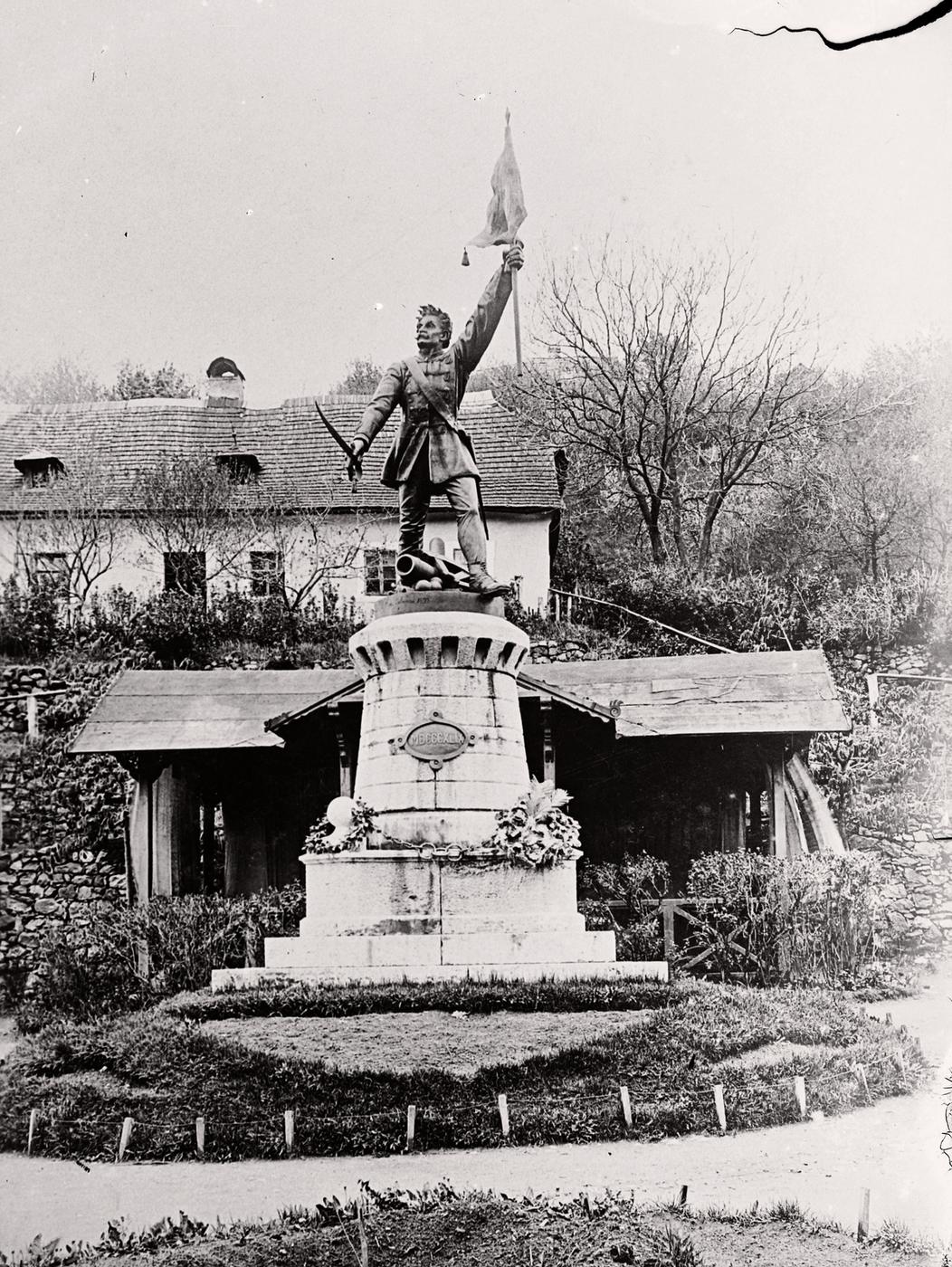
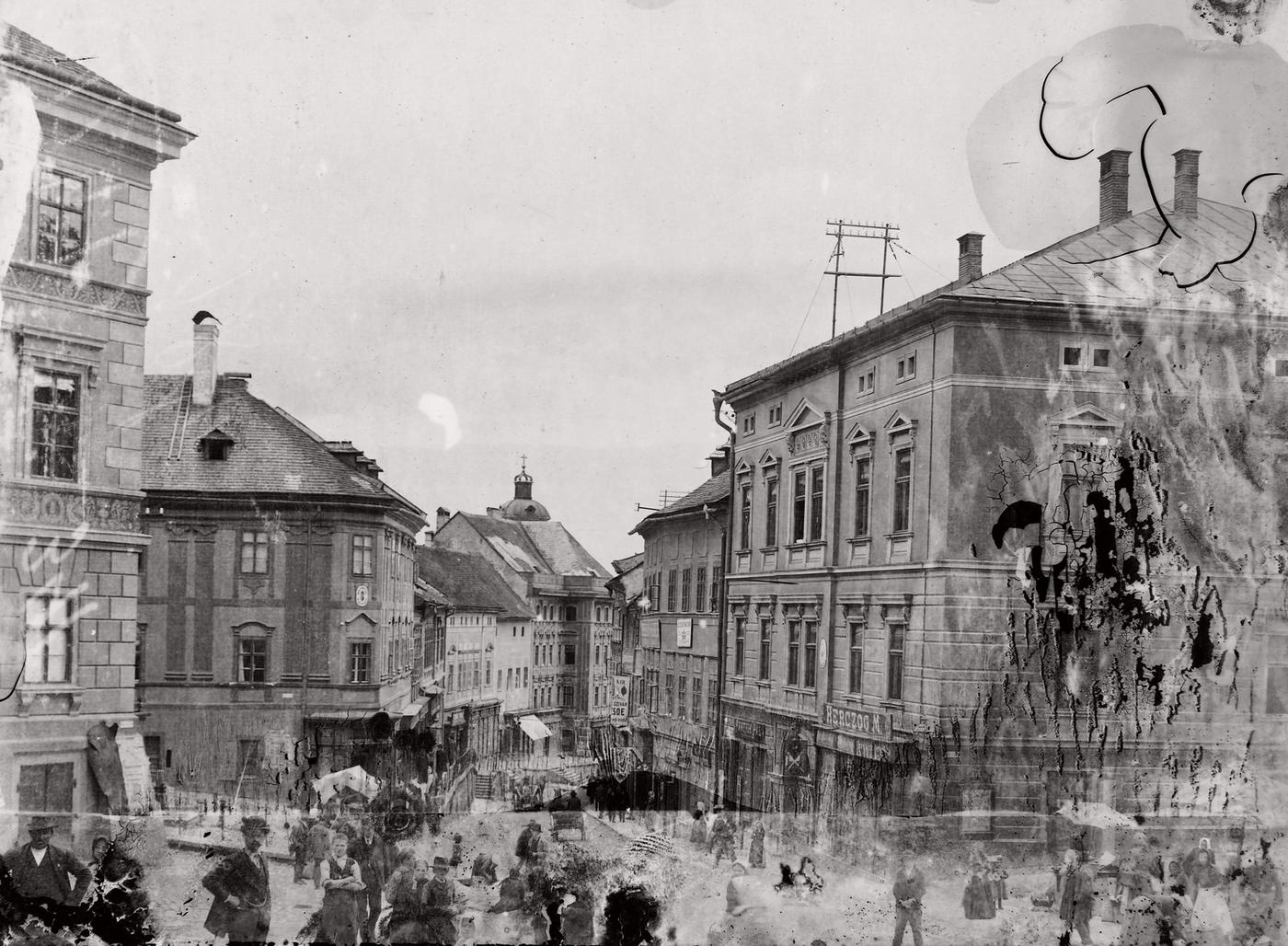
Selmecbánya, Erzsébet tér: the Honvéd Statue erected in memory of the honvéd soldiers of 1848–49, 1907.1907 · FORTEPAN / Magyar Földrajzi Múzeum / Erdélyi Mór cége · CC BY-SA 3.0 · Fortepan 86778The main square of Selmecbánya, Kossuth Lajos tér, 1906.1906 · FORTEPAN / Magyar Földrajzi Múzeum / Erdélyi Mór cége · CC BY-SA 3.0 · Fortepan 86447
Clicking a photograph opens it on the Fortepan website. Terms of use: credit Fortepan and the donor (CC BY-SA 3.0).
The records describe Molnár Benjámin as a smallholder; he was still alive in 18995, but no longer in 192718. According to the family memoir he was born in 1848 in Hajdúdorog, the first child of Molnár János, a smallholder, and Fehérvári Teréz; the 1875 Greek Catholic baptismal entry of his son György refers to him as “Nemes Molnár Benjamin” (“nemes” meaning noble)1. His first wife, Korondán Krisztina, died shortly after the birth of their son György; his second marriage also ended with his wife’s death, and through his third marriage a boy sixteen years younger than György also came into the family1.
According to family oral tradition, Molnár Benjámin lost his fortune after jaunts on horseback to the Aranybika hotel in Debrecen and the revelry that went with them1. The memoir has it that in his son’s marriage entry he already appears as a “nincstelen napszámos” (propertyless day labourer)1; the processed 1899 entry, however, describes him as a smallholder5.
Fact sheet: every known detail with its record (2 people)
#16 Molnár Benjámin c. 1848–Certain
Born
1848, Hajdúdorog; according to the family memoir, the first child of Molnár János and Fehérvári Teréz1
his first wife was Korondán Krisztina (#17)5; according to the family memoir he married three times, his second wife also died, and through his third marriage a further son joined the family1
Orosz István, smallholder and agricultural day labourer, died of consumption at one o’clock in the morning on 3 August 1898 in Hajdúdorog, in house no. 230, aged 54; his birth can therefore be placed in 1843–184417. The death entry names his parents as the late Orosz István, agricultural day labourer, and the late Molnár Mária17. His death was registered by his son, Orosz Mihály, whose identity was vouched for by Kökényesi Gergely, a village councillor17.
His wife, Szilágyi Krisztina, gave their daughter Julianna in marriage in 1899 as a widow and housewife5; by 1956 she was no longer alive7.
Fact sheet: every known detail with its record (2 people)
3 August 1898, 1 a.m., Hajdúdorog 230.; cause: consumption; reported by his son, Orosz Mihály, whose identity was confirmed by Kökényesi Gergely, sworn member of the village council17
Great-great-grandparents · Feldmájer line #20, #21
Feldmayer József and Káldy Zsuzsanna
According to the family memoir, Feldmayer – originally Pfeilmajer – József was born in 1849 in Hajdúdorog, the first-born son of Julius Pfeilmajer, who had come from Selmecbánya (today Banská Štiavnica, Slovakia), and Juhász Katalin, and was baptised Greek Catholic; the baptismal entry recorded his father under the name “Feldmájer Gyula”1. After becoming an independent master joiner, he married Káldy Zsuzsanna in 1872, at the age of 231. The records mention him in 1898 as an independent master joiner8; by 1932 he was no longer alive23.
He took on the family’s German mother tongue from his father so thoroughly that he taught German to his own first-born son as well; he had his children registered under the name Pfeilmajer, as Roman Catholics1. He paid for the schooling of his two youngest sons: one of them, Imre, became an army officer, the other an officer of the Finance Guard (customs and excise), while his daughters, Irma and Irén, became teachers at the Eötvös Gimnázium in Budapest1.
Káldy Zsuzsanna died of cirrhosis of the liver on 10 May 1932 in Debrecen, aged 78; her death was registered by Feldmayer Imre23; according to the family memoir, one of her sons, Imre, was an army officer1. The death entry names her parents as the late Káldy József and the late Hadas[?] Júlia23; according to the family memoir, her father was Káldy Gábor, a Reformed (Calvinist) master joiner from Hajdúnánás, and her mother the Hajdúdorog-born, Greek Catholic Hadas Julia1.
Fact sheet: every known detail with its record (2 people)
#20 Feldmayer József c. 1849–Certain
Born
1849, Hajdúdorog; Greek Catholic baptism, his father named in the entry as “Feldmájer Gyula”1
Parents
according to the family memoir, Julius Pfeilmajer and Juhász Katalin1
József (1875, #10)8; Imre, army officer1; according to the family memoir, Irma and Irén (teachers at the Eötvös Grammar School in Budapest), as well as Erzsébet and Lajos1
Died
after 1898 (“önálló asztalosmester” – independent master joiner)8, before 1932 (“néhai” – the late)23
the late Káldy József and the late Hadas[?] Júlia23; according to the family memoir, Káldy Gábor, a Reformed (Calvinist) master joiner of Hajdúnánás, and Hadas Julia1
10 May 1932, Debrecen, a widow; cause: cirrhosis of the liver; reported by Feldmayer Imre23
Great-great-grandparents · Feldmájer line #22, #23
Baksay István and Némeczki Anna
According to the family memoir, Baksay István was Hajdúdorog’s first butcher, the owner of the butcher’s shop on the main square1. The records mention him in 1898 as an independent master butcher, and in 1926 as a butcher and slaughterman8,16. In 1878 he lived in house no. 481, and in 1926 in house no. 157119,16. He died of a cerebral haemorrhage on 2 October 1926, aged 76; his death was registered by his son, Baksay István junior16. According to the death entry his parents were Baksay István and Virág Julianna16.
His wife, Némeczki Anna – Náni to her grandchildren – died a widow on 6 October 1937, aged 82, in house no. 61824. Her parents were Némeczki Ferenc and Rekó[?] Mária24. Their daughter, Irma Mária, was born in 187819.
Fact sheet: every known detail with its record (2 people)
the late Baksay István and the late Virág Julianna16
Occupation
1898: independent master butcher8; 1926: butcher and slaughterer16; according to the family memoir, the first butcher in Hajdúdorog and owner of the butcher’s shop on the main square1
6 October 1937, 9 p.m., Hajdúdorog 618., a widow; cause: stomach cancer; reported by Baksay István24
Great-great-grandparents · Papp line #24, #25
Papp György and Domokos Anna
Domokos Anna died of a stroke on 28 July 1899 in Hajdúdorog, aged 49, in house no. 104115. Her death was registered by her husband, Papp György, an independent master bootmaker; according to the entry, Domokos Anna’s parents were Domokos Demeter, a smallholder, and Pogácsás Anna15. A bootmaker (csizmadia) was a small craftsman who made and repaired bootsa; Hajdúdorog’s first trade association, the Bootmakers’ Trade Association (Csizmadia Ipartestület), was founded in 1873b. By 1905, at his son’s wedding, Papp György is already mentioned as an independent village shopkeeper12: village shopkeepers ran general stores in villages and small towns, selling mainly food in small quantitiesc. Two sons of the couple are known: György was born in 1880 and Mihály in 188612,21.
Papp György was no longer alive in 191121. He is probably the 62-year-old village shopkeeper Papp György who died of pneumonia on 28 December 1909 in house no. 119925. The match is supported by the occupation, the age and the time of death, and also by the fact that his younger son was given the name of Papp Mihály, who appears in the entry as his father; the death entry, however, names his wife as Sándor Anna25. If the identification is correct, Papp György remarried after Domokos Anna’s death.
already “néhai” (the late) by 191121; probably identical with Papp György, village shopkeeper of Hajdúdorog, who died of pneumonia on 28 December 1909, aged 6225
the late Domokos Demeter, smallholder, and the late Pogácsás Anna15
Died
28 July 1899, 2 p.m., Hajdúdorog 1041.; cause: apoplexy; reported by her husband15
Great-great-grandparents · Papp line #26, #27
Fodor János and Hajdu Julianna
In 1895 Fodor János was a farmer living in house no. 446; it was he who registered the death of his mother, Zováth Teréz, and the registrar specifically noted his declaration that the deceased was his mother26. In 1905, at his daughter’s wedding, he appears as a farm carter12. He died of pneumonia on 10 August 1943, aged 86; his death entry names his parents as the late Fodor János and the late Zováth Teréz27.
His wife, Hajdu Julianna, died of stomach cancer on 13 July 1935, aged 73, in house no. 72128. Her parents were Hajdu Mihály and Huszti Zsuzsanna28. Their daughter, Julianna, was born in 188512.
Fact sheet: every known detail with its record (2 people)
the late Hajdu Mihály and the late Huszti Zsuzsanna28
Died
13 July 1935, 8 p.m., Hajdúdorog 721.; cause: stomach cancer28
Great-great-grandparents · Póka line #28, #29
Póka György and Rozsnyai Márta
Probable link
According to Póka Imre’s 1897 marriage entry, his father was Póka György, village swineherd, who was by then no longer alive; his mother, Rosnyai Márta, had remarried and appeared at that time under her second husband’s name22. Póka Imre’s 1930 death entry names the father as Póka Imre and the mother as Rozsnyai Márta14. Since in 1897 the groom himself supplied his parents’ details, the family tree follows the name Póka György, but marks the link only as probable.
Fact sheet: every known detail with its record (2 people)
His son’s 1930 death entry gives the father’s name as Póka Imre14; in the 1897 marriage entry the groom himself gave his parents’ details, so that entry is the more reliable22.
#29 Rozsnyai Márta Certain
Status
living in 1897, remarried (“most …urgyai[?] Györgyné”, i.e. now the wife of …urgyai György), housewife22
Veres Mihály, agricultural day labourer, was no longer alive in 189722. His widow, Kompár Mária, was then a worker at the Hajdúdorog tobacco purchasing office22. She died of old age on 17 March 1916, aged 80, in house no. 1857, as a dependant supported by her son; her death was registered by her son, Veres Mátyás29. According to the death entry her parents were Kompár György and Juhász Mária29.
Fact sheet: every known detail with its record (2 people)
17 March 1916, 2 p.m., Hajdúdorog 1857.; cause: old age; reported by her son, Veres Mátyás29
Historical background · 1780–1840
Selmecbánya, the silver town
Selmecbánya was granted town status in 1238, and in the Middle Ages it was the most important silver- and gold-producing town of the Kingdom of Hungarya. In 1782, with 23,192 inhabitants, it was the third-largest town in the country after Pozsony (today Bratislava) and Debrecen; in 1850 only 14,098 inhabitants were recorded in Selmecbánya and Bélabánya togethera,b. In 1627 gunpowder was used here in mining, among the first instances anywhere in the worlda. Between 1790 and 1823 the Upper Biber Adit (Felső-Biber-táró) yielded an annual average of some 144 kilograms of gold and 8,875 kilograms of silver; driving of the Joseph II Drainage Adit (II. József-altáró), which served to drain the mines, began in 1782 and was not completed until 1878c.
Organised vocational training in mining began in 1735 with Mikoviny Sámuel’s mining school, which Maria Theresa raised to the rank of an academy on 13 December 1762; the institution is counted among the world’s first institutions of higher technical educationd. The academy gained a department of forestry in 1807, was renamed the Academy of Mining and Forestry (Bányászati és Erdészeti Akadémia) in 1848, and moved to Sopron in 1919a,d.
In the German mining tradition the key figure on the ladder of ranks was the hewer (German Häuer or Hauer): the miner who cut the rock and the ore and had passed the hewer’s examinatione. In Selmecbánya the hewer already formed a separate wage category in 1515c. The Selmecbánya register recorded Joannes Pfailmayer in 1820 as “Hajerus”, i.e. a hewer, and his wife’s probable father, Carolus Eitzenbaum, was also a miner2,30. On the hill above the town the Baroque Calvary (Kálvária) was built between 1744 and 1751f; of the town gates, only the Hegybánya (Szélakna, Piarg) Gate survives, built in 1554 because of the Ottoman threatg.
Hajdúdorog became a town by an entirely different route. On 12 December 1605, at Korpona (today Krupina, Slovakia), Bocskai István ennobled 9,254 hajdús and settled them on his estatesh. Dorog became a hajdú town in 1616, and a charter of Ferdinand II of 1632 confirmed it as one of the seven royal hajdú townsi. The hajdús enjoyed collective nobility and exemption from taxes and tolls, in return for which they owed military serviceh. The Byzantine-rite community grew strong in the town early on: in 1638 Marinicz János became priest of the Church Slavonic-language parishi,j. On 12 February 1795 Dorog was granted the rank of a market town (mezőváros) entitled to hold three national fairsi.
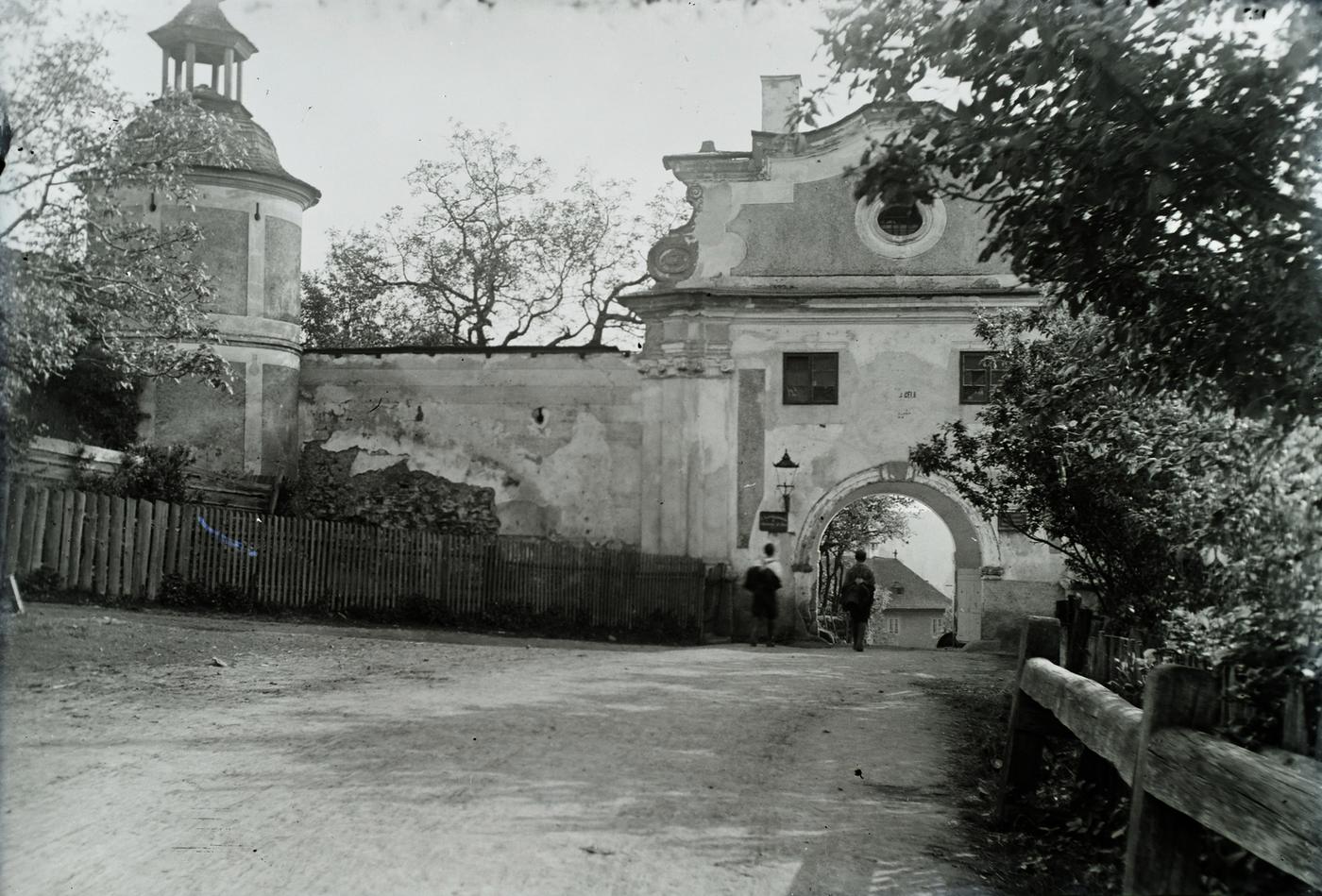
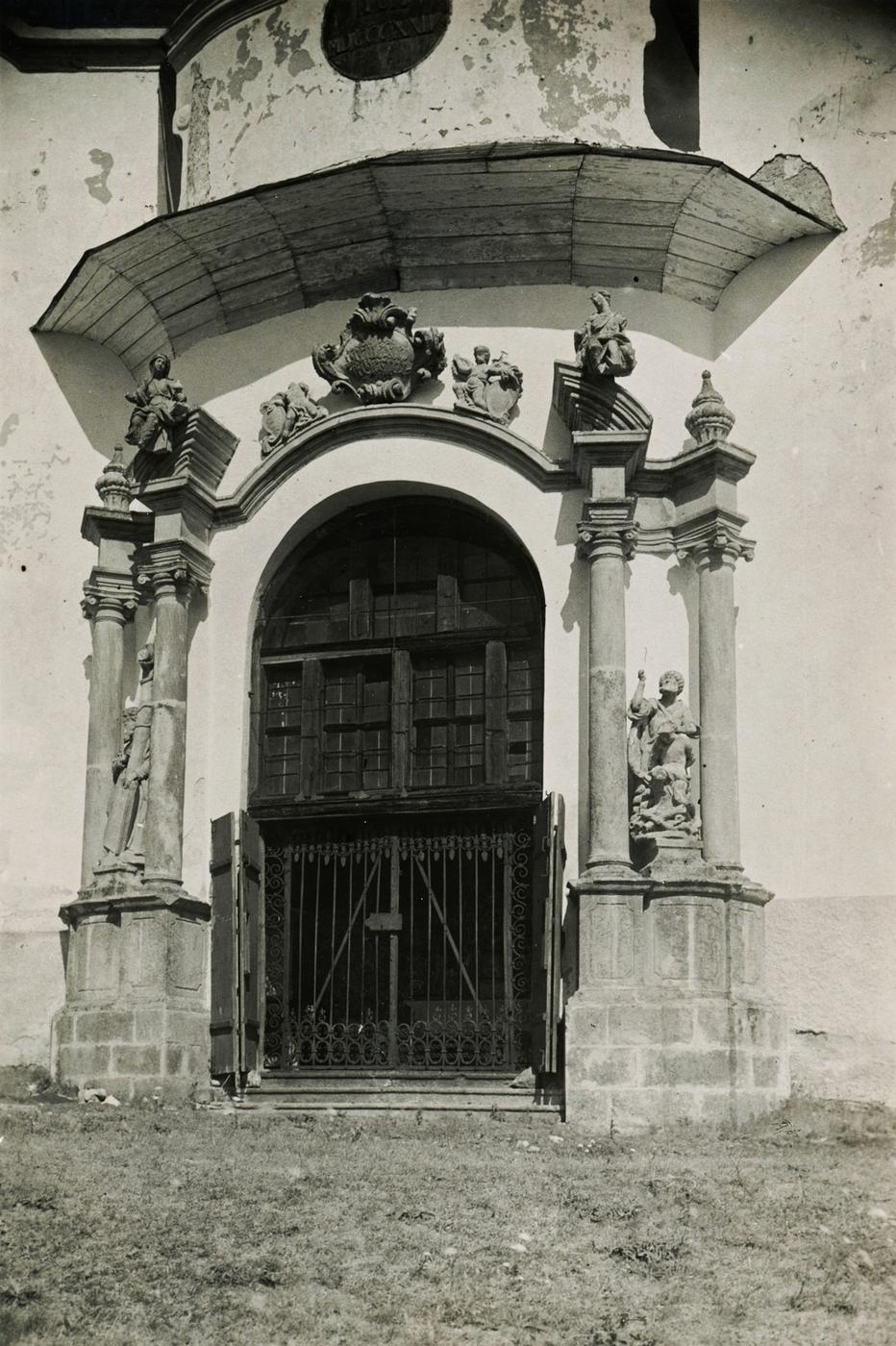
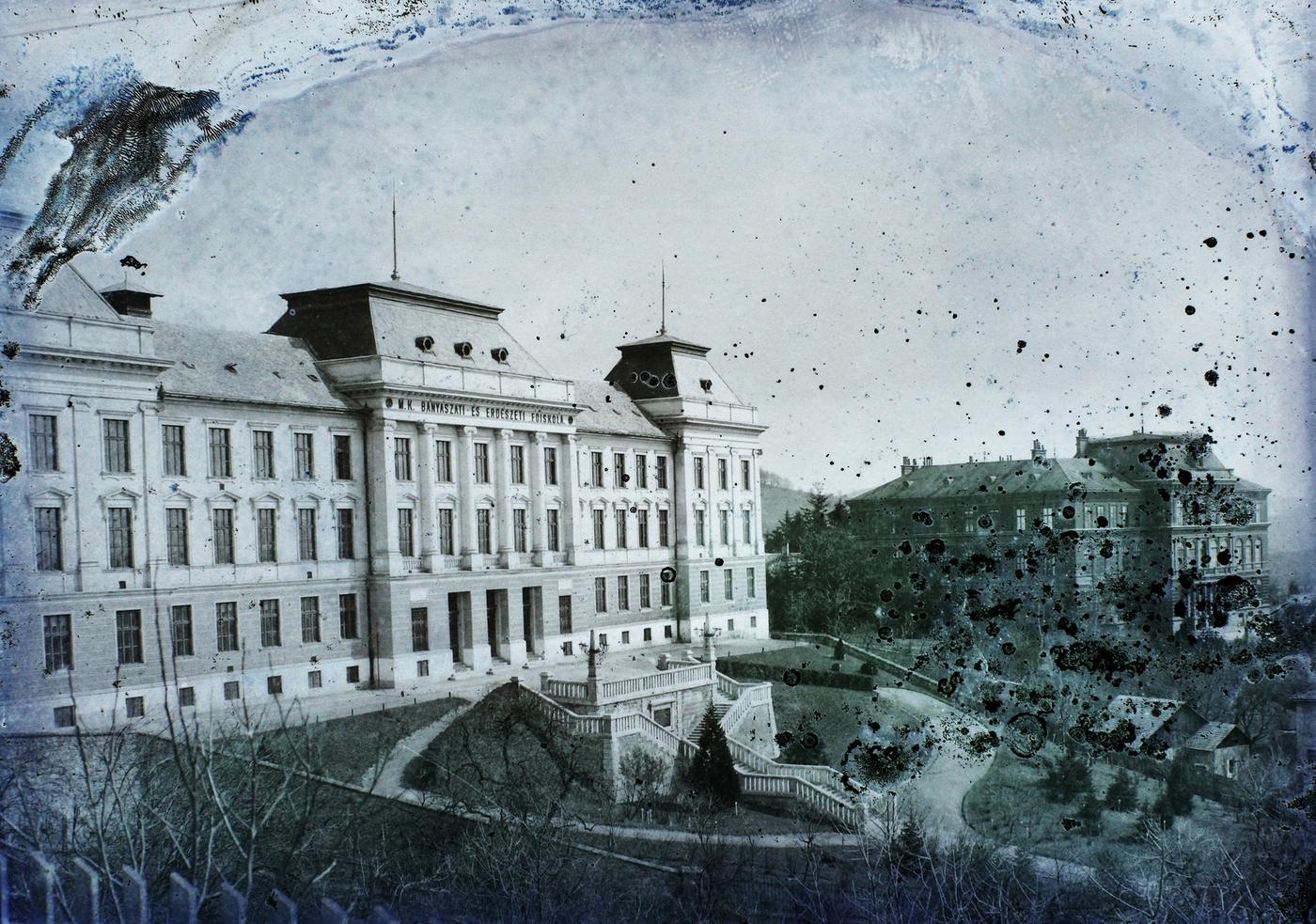
The Hegybánya (Szélakna, Piarg) town gate, the only surviving gate of Selmecbánya, 1919.1919 · FORTEPAN / Jánossy Virág · CC BY-SA 3.0 · Fortepan 130360Entrance to the upper church, known as the German church, of the Calvary in Selmecbánya, 1930.1930 · FORTEPAN / Schermann Ákos · CC BY-SA 3.0 · Fortepan 95813The College of Mining and Forestry (Bányászati és Erdészeti Főiskola) in Selmecbánya, 1906.1906 · FORTEPAN / Magyar Földrajzi Múzeum / Erdélyi Mór cége · CC BY-SA 3.0 · Fortepan 86640
Clicking a photograph opens it on the Fortepan website. Terms of use: credit Fortepan and the donor (CC BY-SA 3.0).
3rd great-grandparents · Molnár line #32, #33, #36, #37
Molnár János and Fehérvári Teréz; Orosz István and Molnár Mária
Probable link
Molnár János, a smallholder of Hajdúdorog, and his wife, the Greek Catholic Fehérvári Teréz, are mentioned only in the family memoir, as the parents of Molnár Benjámin1. Molnár Lajos researched his Hajdúdorog ancestors in, among other places, the branch archive in Hajdúböszörmény1; the memoir does not name the source of this particular information. The record is not part of the processed collection, so the link is shown as probable.
The parents of Orosz István (1898) – Orosz István, agricultural day labourer, and Molnár Mária – are named in their son’s death entry; by 1898 neither of them was still alive17.
Fact sheet: every known detail with its record (4 people)
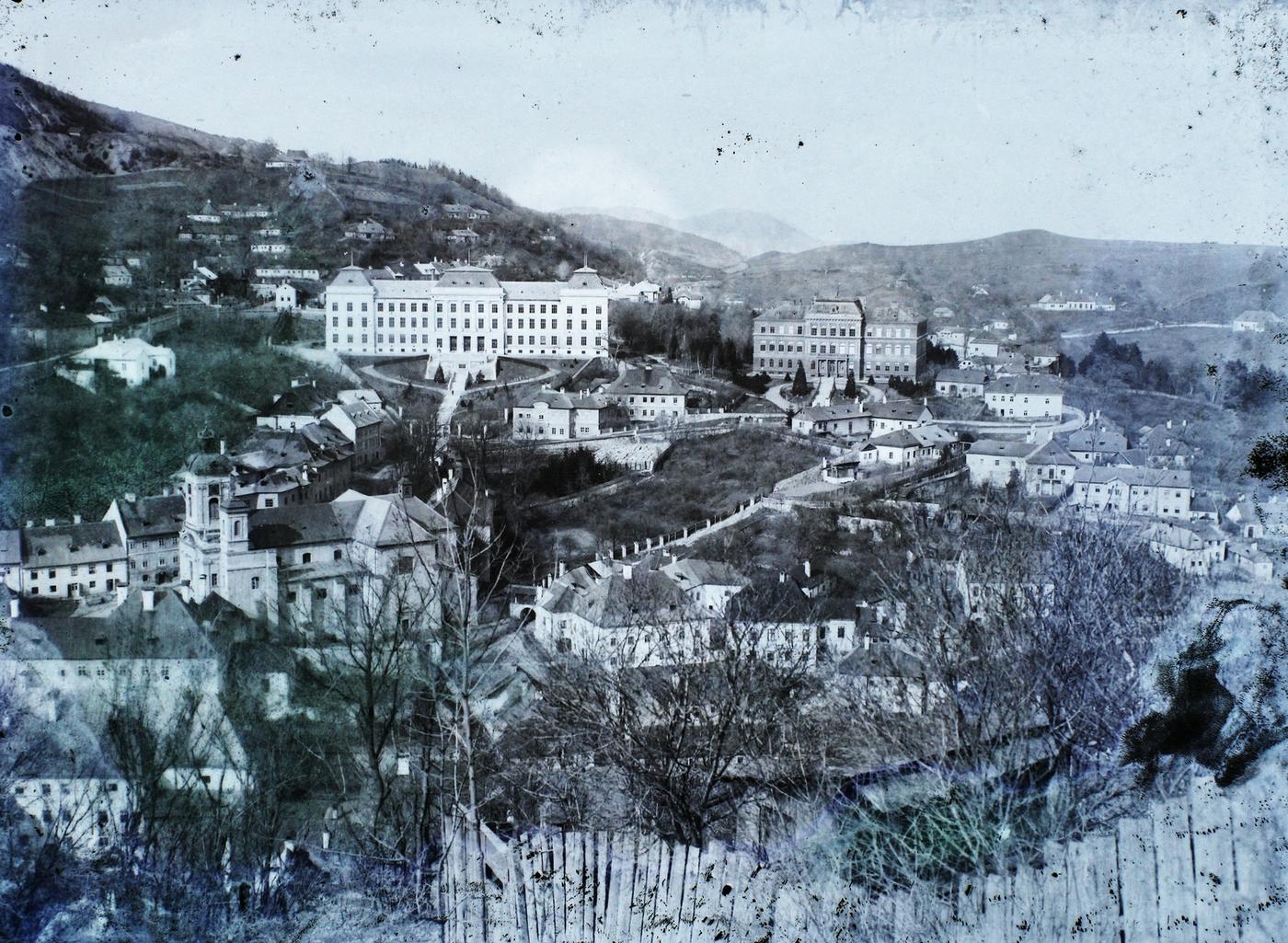
View of Selmecbánya with the buildings of the Academy of Mining and Forestry, 1906.1906 · FORTEPAN / Magyar Földrajzi Múzeum / Erdélyi Mór cége · CC BY-SA 3.0 · Fortepan 86639 ↗
The progenitor of the Feldmájer family of Hajdúdorog, Julius, came from Selmecbánya, one of the most important silver-mining towns of the Kingdom of Hungary. He was baptised on 11 December 1820 in the Roman Catholic church of Selmecbánya; his father, Joannes Pfailmayer, was a “Hajerus”, i.e. a hewer, and his mother was Elisabetha Eitzenbaum2. His godfather was a gentleman of baronial rank, “Ill. L. B. Julius de Geramb”[?] (Illustrissimus Liber Baro, i.e. the most illustrious Free Baron), whose name the child also received; his other godparent was D. Carol. de Adda2.
According to the family memoir, Julius was the only one of the large family to set out, towards the end of the 1840s: his settling in Hajdúdorog was made possible by joinery work he had won at the Greek Catholic church1. In 1848 or 1849 he married Juhász Katalin, the daughter of a local smallholder, in the Greek Catholic church of Hajdúdorog1. Their first-born son, József, was baptised Greek Catholic in 1849, and the priest clearly entered the father in the register as “Feldmájer Gyula”1. Julius died in 1864, aged 441.
The link between Selmecbánya and Hajdúdorog was uncovered by Molnár Lajos’s archival research; his starting point was an entry in the RadixIndex database, according to which “Julius Pfeilmájer of Selmecbánya married Juhász Katalin in 1849 in the Greek Catholic cathedral”1. The Hajdúdorog marriage and baptismal entries are not part of the processed collection, so the family tree marks this link as probable.
Fact sheet: every known detail with its record (2 people)
#40 Julius Pfeilmajer 1820–1864Probable
Baptism
11 December 1820, Selmecbánya (today Banská Štiavnica, Slovakia), Roman Catholic parish; godparents: Ill. L. B. Julius de Geramb[?] and D. Carol. de Adda; baptised by Carolus Jeger2
Parents
Joannes Pfailmayer, hewer (“Hajerus”), and Elisabetha Eitzenbaum2
In Hajdúdorog
according to the family memoir, he arrived in the late 1840s and was the joiner of the Greek Catholic church; in his child’s baptismal entry he appears as “Feldmájer Gyula”1
Marriage
1848 or 1849, Hajdúdorog, Greek Catholic church – Juhász Katalin (#41)1
Káldy József and Hadas Júlia; Baksay István and Virág Julianna; Némeczki Ferenc and Rekó Mária
Káldy Zsuzsanna’s 1932 death entry names her father as Káldy József and her mother as Hadas[?] Júlia23. The family memoir gives her father as Káldy Gábor, a Reformed master joiner from Hajdúnánás, and her mother as a Hajdúdorog-born Greek Catholic woman1. The two sources agree on the mother’s name; the father’s first name could be settled by Káldy Zsuzsanna’s marriage entry.
The parents of the master butcher Baksay István – Baksay István and Virág Julianna – and the parents of Némeczki Anna – Némeczki Ferenc and Rekó[?] Mária – are named in their children’s death entries; by 1926 and 1937 respectively, none of them was still alive16,24.
Fact sheet: every known detail with its record (6 people)
#42 Káldy József (Gábor?) Certain
Note
Named Káldy József in his daughter’s 1932 death entry23; according to the family memoir, Káldy Gábor, a Reformed (Calvinist) master joiner of Hajdúnánás1.
#43 Hadas Júlia Certain
Name
Hadas[?] Júlia23; according to the family memoir, born in Hajdúdorog, Greek Catholic1
3rd great-grandparents · Papp line #48, #49, #50, #51
Papp Mihály and Horváth Mária; Domokos Demeter and Pogácsás Anna
Probable link
Papp Mihály and Horváth Mária were the parents of Papp György, the village shopkeeper who died in 190925. If – as is probable – this Papp György is the same person as Domokos Anna’s husband, then they are the earliest known ancestors of the line carrying the Papp name; the family tree therefore marks them as probable. (Through the Fodor–Zováth line, the Papp line reaches back one generation further.)
Domokos Anna’s parents, Domokos Demeter, a smallholder, and Pogácsás Anna, a housewife, were no longer alive when their daughter died in 189915.
Fact sheet: every known detail with its record (4 people)
#48 Papp Mihály Probable
Note
Father of Papp György, the village shopkeeper who died in 190925; if the latter is identical with Domokos Anna’s husband, then he is the earliest known ancestor of the Papp surname line.
#49 Horváth Mária Probable
Note
Mother of Papp György, the village shopkeeper who died in 190925.
3rd great-grandparents · Papp line #52, #53, #54, #55
Fodor János and Zováth Teréz; Hajdu Mihály and Huszti Zsuzsanna
Zováth Teréz was baptised on 16 March 1824 in the Greek Catholic church of Hajdúdorog, the daughter of Zováth György and Rákó Anna31. On 14 February 1841 she married the 20-year-old Fodor János; the entry gives her age as 18, whereas according to the baptism she was 1631,32. According to the entry, the betrothed couple were natives and residents of Dorog, and their witnesses were Papp Mihály and Simon János32. The two entries nicely illustrate the change of language in record-keeping: the baptism was still recorded in Latin, the marriage already in Hungarian31,32.
Zováth Teréz died a widow on 17 October 1895, aged 73, in house no. 703; the entry gives her occupation as “földmíves” (farmer)26. The ages in her death entry (73) and her marriage entry (18) both point to a birth around 1822, two years earlier than the baptism26,31,32. Ages in the registers of the period were often only estimates; since the 1824 entry names the same parents, the family tree treats it as her baptism, but flags the discrepancy as an open question.
The parents of Hajdu Julianna, wife of their son Fodor János – Hajdu Mihály and Huszti Zsuzsanna – are named in their daughter’s 1935 death entry28.
Fact sheet: every known detail with its record (4 people)
#52 Fodor János c. 1820 – before 1895Certain
Born
c. 1820–1821 (aged 20 in 1841)32; possible baptism: 10 September 181833
Marriage
14 February 1841, Hajdúdorog, Greek Catholic church – Zováth Teréz (#53); witnesses: Papp Mihály and Simon János32
Kompár Mária’s parents, Kompár György and Juhász Mária, are named in their daughter’s 1916 death entry; by then neither of them was still alive29. Kompár Mária was born around 1836, so her parents may have been born in the first decades of the 19th century.
Fact sheet: every known detail with its record (2 people)
According to Julius’s 1820 baptismal entry, his father, Joannes Pfailmayer, was a “Hajerus”; this is the Latinised form of the German “Häuer” – in English a hewer – the qualified miner who cut rock and ore in the mine2a. According to the family memoir he was born in 1780 and later became a mine carpenter1. The entry names the mother as Elisabetha Eitzenbaum2.
One possible entry for Elisabetha Eitzenbaum’s baptism is dated 6 March 1794 in Selmecbánya: the parents of the baptised girl were Carolus Eitzenbaum, a miner, and Anna30. The family memoir gives Elisabetha’s year of birth as 1783 and likewise names her parents – in the form Elsenbaum – as Carl (Carolus) and Anna1. The two sources agree on the parents’ names, so the family tree marks them as probable ancestors, but treats Elisabetha’s year of birth as an open question.
possible baptism: Selmecbánya, 6 March 179430; according to the family memoir, 17831
Parents
according to both sources, Carolus Eitzenbaum and Anna30,1; in the family memoir in the form “Carl Elsenbaum”1
4th great-grandparents · Papp line #104, #105, #106, #107
Fodor Miklós and Grojkó Mária; Zováth György and Rákó Anna
Possible link
Zováth Teréz’s parents, Zováth György and Rákó Anna, are named in two records: the 1824 baptismal entry (“Georg. Zováth – Anna Rákó”) and Zováth Teréz’s 1895 death entry (“néhai Zováth György földmíves”, “néhai Rákó Anna háztartásbeli” – the late Zováth György, farmer; the late Rákó Anna, housewife)31,26. In 1824 the baptismal entry describes the father as “Hospes” (Latin for ‘guest, newcomer’); the social meaning of the term here is not clear31.
No record names the parents of the Fodor János who married in 1841. On the 1818 page of the Hajdúdorog Greek Catholic baptismal register there is only one Joannes Fodor: he was baptised on 10 September 1818, and his parents were Nicolaus (Miklós) Fodor and Maria Grojkó[?]; the entry describes them as Ruthenian and as “Hospes”33. This child would have been 22 in February 1841, whereas the marriage entry gives the groom’s age as 2033,32. The identification is therefore only possible; on the same page another Fodor family (Joannes Fodor and Anna Fejér) also had a child baptised33.
Fact sheet: every known detail with its record (4 people)
#104 Fodor Miklós Possible
Note
Father of Joannes Fodor, baptised on 10 September 1818 (“Nicol. Fodor”, Ruthenian, “Hospes”, i.e. guest or newcomer)33.
#105 Grojkó[?] Mária Possible
Note
In the 1818 entry “Maria Grojko[?]”; the reading of the surname is uncertain33.
#106 Zováth György Certain
Note
A member of the Greek Catholic parish of Hajdúdorog, “Hospes” (Latin for ‘guest, newcomer’; its meaning here is unclear)31; at his daughter’s death “néhai Zováth György földmíves” (the late Zováth György, farmer)26
#107 Rákó Anna Certain
Note
At her daughter’s death “néhai Rákó Anna háztartásbeli” (the late Rákó Anna, housewife)26
5th great-grandparents · Feldmájer line #162, #163
Carolus Eitzenbaum and Anna
Probable link
Carolus Eitzenbaum, a miner (“metall.”) of Selmecbánya, and his wife, Anna, are the earliest ancestors in the family tree known by name30. In the 1794 entry the mother’s name reads “Anna Sabel[?]”, or possibly “Anna Isabel”; “Sabel” could also be a surname, so the family tree records only the first name Anna30. According to the family memoir, in this period “mothers were registered only by their first names”1. The family memoir places Carolus’s birth around 1753 or 17631.
Fact sheet: every known detail with its record (2 people)
in the entry “Anna Sabel[?]” (possibly “Isabel”); according to the family memoir, only her first name was recorded30,1
Open questions
The Feldmájer line can be traced back to the mining families of Selmecbánya, in the second half of the 18th century, and the Papp line, via the Fodor–Zováth branch, to the beginning of the 19th century; the records of the Molnár line and the Póka line reach back to ancestors born in the 1830s and 1840s. The most important open questions are:
The marriage of Julius Pfeilmajer and Juhász Katalin in Hajdúdorog (1848/1849), the baptism of their son József (1849) and the death of Julius (1864): these records would confirm the link between Selmecbánya and Hajdúdorog1.
The 1872 marriage entry of the elder Feldmayer József and Káldy Zsuzsanna, which could settle whether Káldy Zsuzsanna’s father was József or Gábor, and the death entry of the elder Feldmayer József (between 1898 and 1932)23,1.
The year of birth of Elisabetha Eitzenbaum: the 1794 baptism in Selmecbánya, or 1783 as given in the family memoir30,1.
The second marriage of Papp György (c. 1847) to Sándor Anna (between 1899 and 1909), which would confirm that the village shopkeeper who died in 1909 was the same person as the husband of Domokos Anna25.
The name of Póka Imre’s father (György or Imre), for example from Póka Imre’s baptismal entry of 187114,22.
The baptism of the Fodor János who married in 1841: the Joannes Fodor of 1818, or a child baptised in 1820–182133,32.
The baptism of Molnár Benjámin (1848) and the marriage of his parents, Molnár János and Fehérvári Teréz; the date of Molnár Benjámin’s death1.
The register entries for the most recent generations: the births of Molnár Annamária and Molnár Gábor, the birth details of Dr. Papp Anna, the deaths of Papp György and Póka Erzsébet in 2002, and the death of Veres Julianna.
A review of the press material in Arcanum Digitheca (funeral notices, lists of tradesmen, directories) is under way; its findings will be added to the website later.
Records and notes
The 33 sources
The numbering matches the note numbers in the narrative, in order of first citation. Click an image to open the record; records with several pages can be paged through. The images of the 32 register entries come from FamilySearch’s public images or from the family collection; the family memoir is cited throughout as a single source.
1 Family memoir (manuscript)
The memoirs of Molnár Lajos (working title: “Remélem, így is érezték” – “I hope they felt it that way too”), edited and annotated by Molnár Gábor; manuscript, 2026, 165 pages. The parts relevant to the family history: “Anna és Lali hol laktak” (“Where Anna and Lali lived”, pp. 9–12), “Életem eseménysora” (“The sequence of events in my life”, pp. 14–21), “A családfám” (“My family tree”, pp. 22–24), “Mozaikok a kisgyerekkoromból” (“Mosaics from my early childhood”, pp. 25–28), Molnár Sebestyén’s “Dédapám története a II. világháború időszakából” (“My great-grandfather’s story from the time of the Second World War”, p. 46), “A Fehértói úti Paradicsom” (“The Paradise on Fehértói út”, pp. 100–101)
Family collection
2 1820 · baptismal register
Selmecbánya, Roman Catholic parish, baptismal register, 1820, p. 173 – baptism of Julius (11 December 1820), parents: Joannes Pfailmayer, hewer, and Elisabetha Eitzenbaum
FamilySearch, registers of the Roman Catholic parish of Selmecbánya (today Banská Štiavnica, Slovakia); Slovak church registers FamilySearch ↗
3 1934 · marriage register
Budapest, civil marriage register (duplicate), 1934, p. 684, no. 2035 – marriage of Papp György and Póka Erzsébet (18 November 1934)
FamilySearch, Budapest civil registers (Budapest City Archives) FamilySearch ↗
4 1911 · birth register
Hajdúdorog, civil birth register, 1911, no. 13 – birth of Molnár Lajos (7 January 1911, registered on 11 January)
Hajdúdorog, Greek Catholic parish, baptismal register, 1878, no. 78 (pp. 289–290) – birth (14 March 1878) and baptism (15 March) of Baksay Irma Mária
FamilySearch, registers of the Greek Catholic parish of Hajdúdorog (microfilm of the Hajdú-Bihar County Archives) – image crop from the family collection
20 1963 · death register
Hajdúdorog, civil death register, 1963, no. 58 – death of Papp György (7 September 1963)
Selmecbánya, Roman Catholic parish, baptismal register, 1794, p. 63 – baptism of Elisabetha (6 March 1794), parents: Carolus Eitzenbaum, miner, and Anna
FamilySearch, registers of the Roman Catholic parish of Selmecbánya (today Banská Štiavnica, Slovakia); Slovak church registers FamilySearch ↗
31 1824 · baptismal register
Hajdúdorog, Greek Catholic parish, baptismal register, 1824, pp. 116–117, no. 70 – baptism of Theresia (16 March 1824), parents: Zováth György and Rákó Anna
FamilySearch, registers of the Greek Catholic parish of Hajdúdorog (microfilm of the Hajdú-Bihar County Archives) FamilySearch ↗
32 1841 · marriage register
Hajdúdorog, Greek Catholic parish, marriage register, 1841, p. 106, no. 10 – marriage of Fodor János and Zováth Teréz (14 February 1841)
FamilySearch, registers of the Greek Catholic parish of Hajdúdorog (microfilm of the Hajdú-Bihar County Archives) FamilySearch ↗
33 1818 · baptismal register
Hajdúdorog, Greek Catholic parish, baptismal register, vol. 4 (1816–1833), 1818, p. 37, no. 202 – baptism of Joannes (10 September 1818), parents: Nicolaus (Miklós) Fodor and Maria Grojkó(?); image 2 is the title card of the microfilm
FamilySearch, registers of the Greek Catholic parish of Hajdúdorog (microfilm of the Hajdú-Bihar County Archives) FamilySearch ↗
How this history was compiled
This family history is based on the records listed and on the family memoir. The images of the records are publicly available FamilySearch images (microfilms from the Hajdú-Bihar County Archives, the Budapest City Archives and the Slovak church registers) or crops from the family collection. Every entry was transcribed from the full-resolution image; uncertain readings are marked with a question mark in square brackets [?]. Hungarian personal names are given in Hungarian order, family name first, as they appear in the records.
Where a link is not proven, both the text and the family tree mark it: a probable link is supported by several consistent pieces of data, or by information in the family memoir based on archival research, while a possible link rests on a single candidate entry or on a match of names. Where the family memoir and a record differ, the text follows the record and mentions the discrepancy. The links between the parents and the grandparents (2–7) are recorded in Molnár Lajos’s own first-hand recollections; the family tree treats these links as certain even where the records examined do not state them.
The family photographs come from the family’s own collection; some of the old pictures were later colourised and digitally restored, as indicated in the captions. A few details, such as Papp Erzsébet’s year of birth, come from information provided by the family. The period townscapes come from Fortepan, the free photo archive (CC BY-SA 3.0); the sources for the historical background sections are given with each section, under “Background sources”.
Compiled in November 2026. Background music: “Afterlight Drift”.